Packwan
Date
19 Oct 2025
Duration
48 hours
Role
Team Lead
Track/Theme
Sustainability
Organizer
Design-a-thon (V-SIgn)
My Interpretation
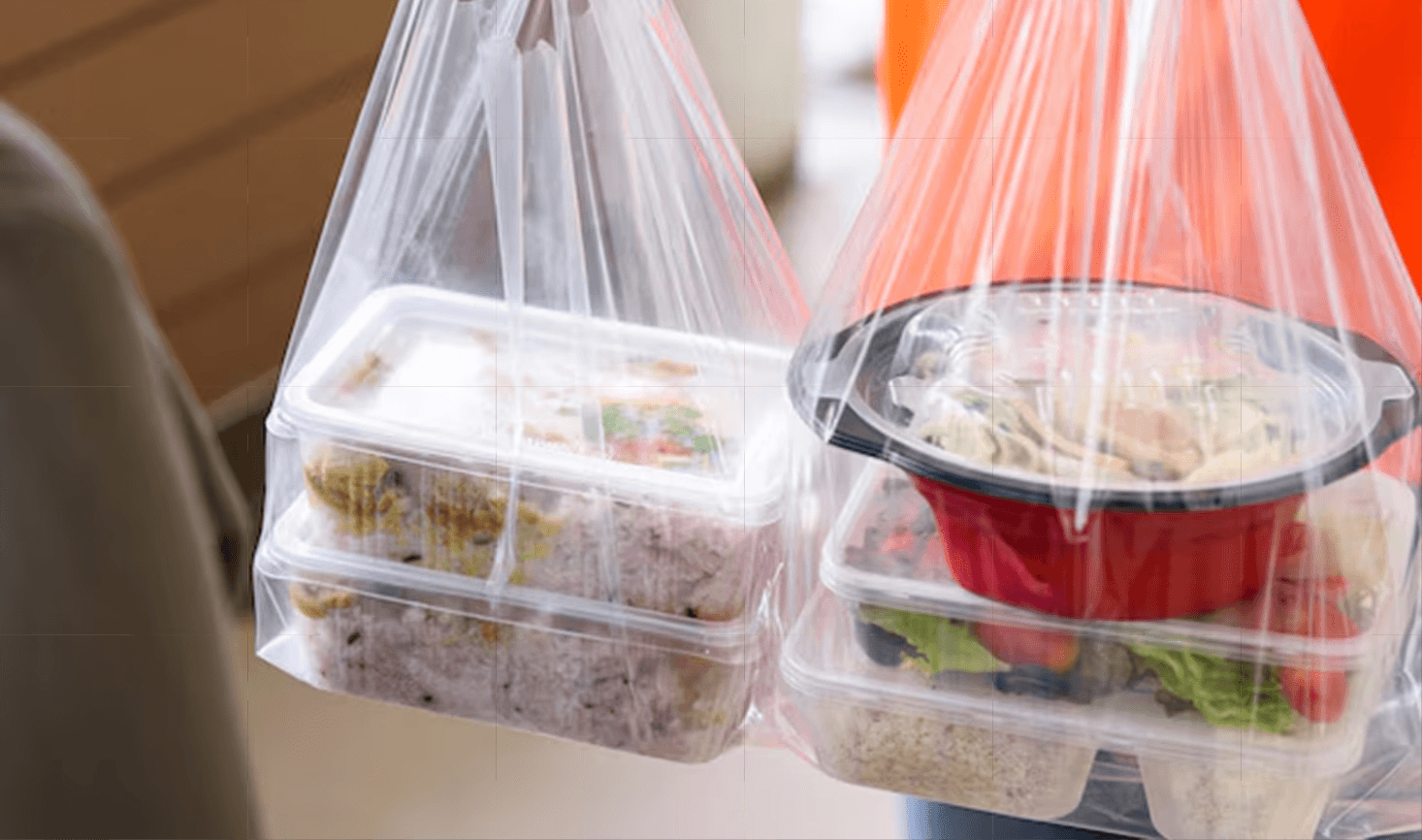
The goal was to design eco-friendly, reusable or recyclable packaging that maintains usability, cost-effectiveness, and thermal/structural performance.
Key Constraints
Time: 48 hours
Limited prototyping resources (3D printing not feasible in time)
Tools: Research, 3D renders, ideation software, limited physical materials
All alone in Design Department with only one more team mate from B.TECH
Thought Process
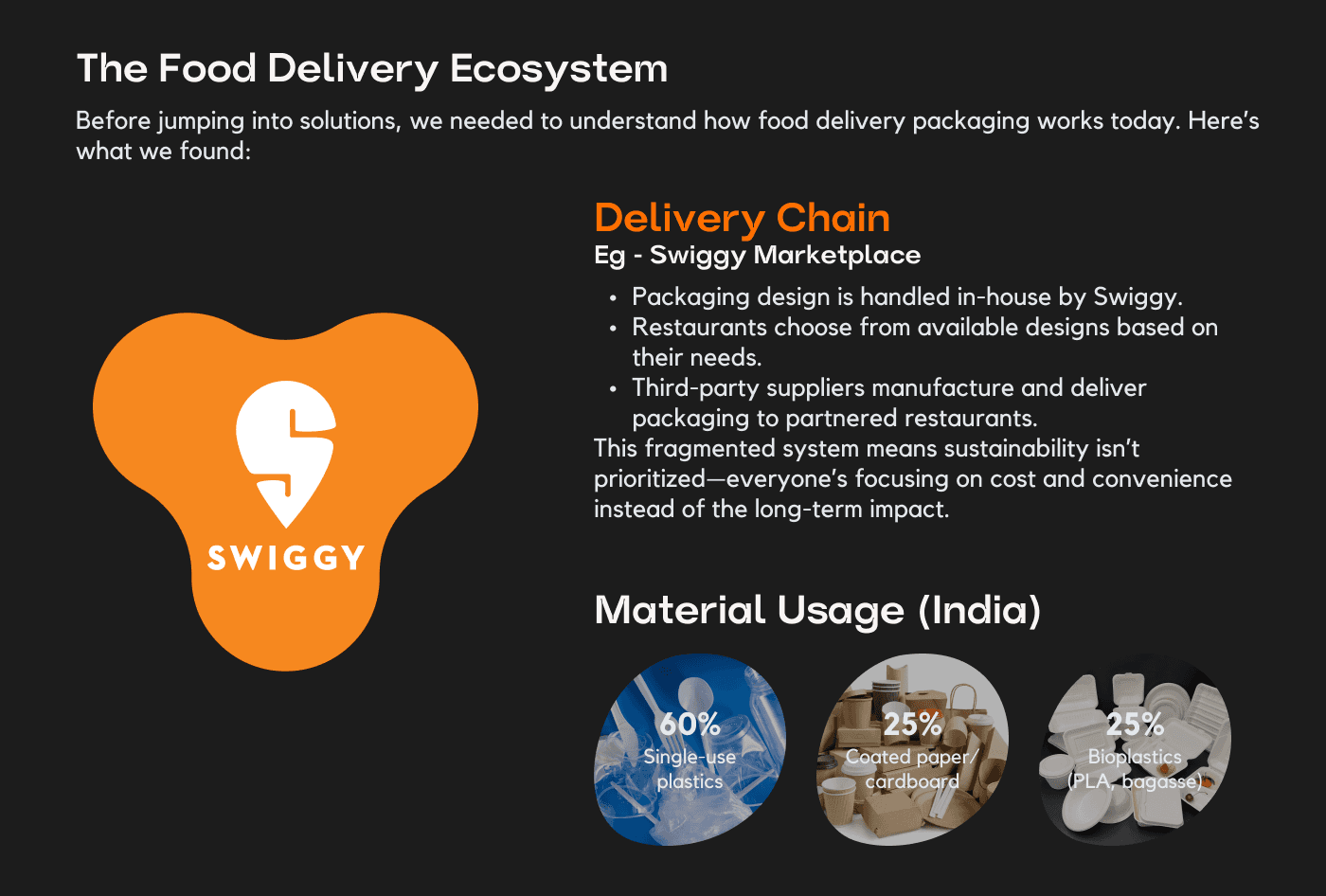
Focused on holistic sustainability — material, packaging design, and system-level recycling. Prioritized research-driven material selection over quick prototyping.
Team Strategy
I handled material research, container design, and 3D renders
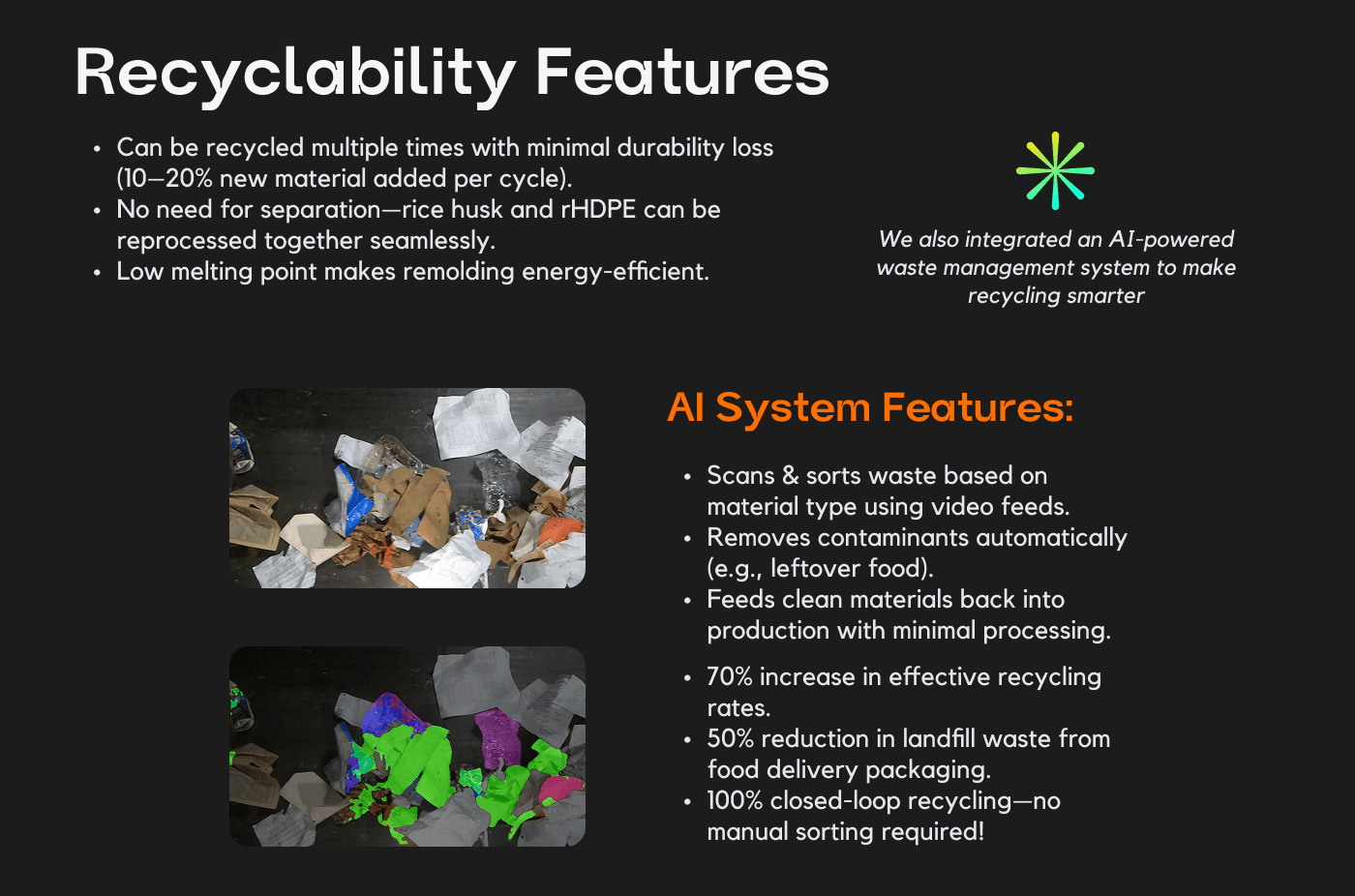
My friend (B.Tech CS) handled AI-driven waste recollection and circular system design
Decision Making
Quickly evaluated bamboo, PLA, bagasse → rejected due to cost, durability, or scalability issues
Settled on Rice Husk + rHDPE composite for affordability, recyclability, and thermal/mechanical performance
Solution Snapshot
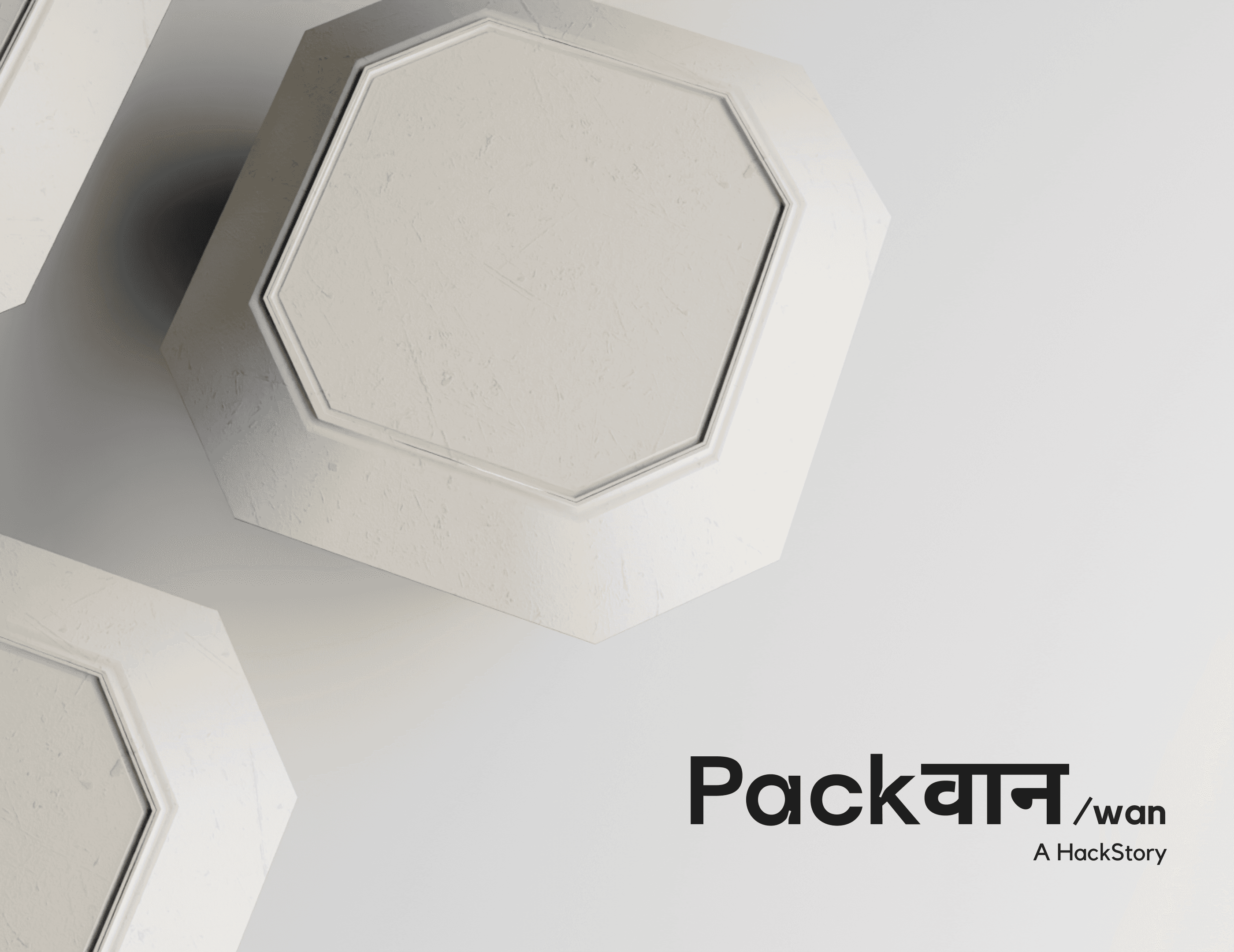
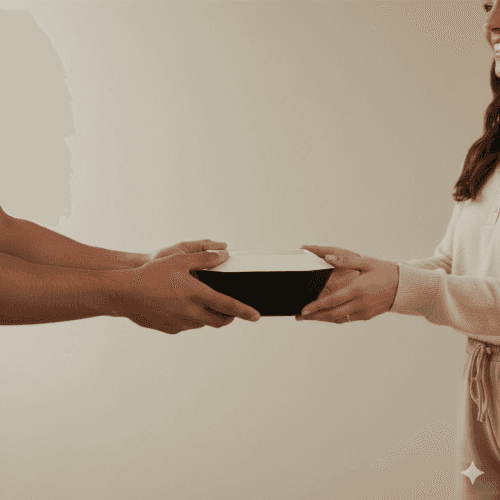
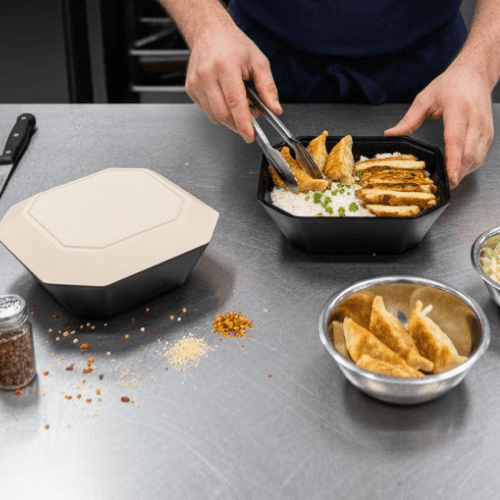
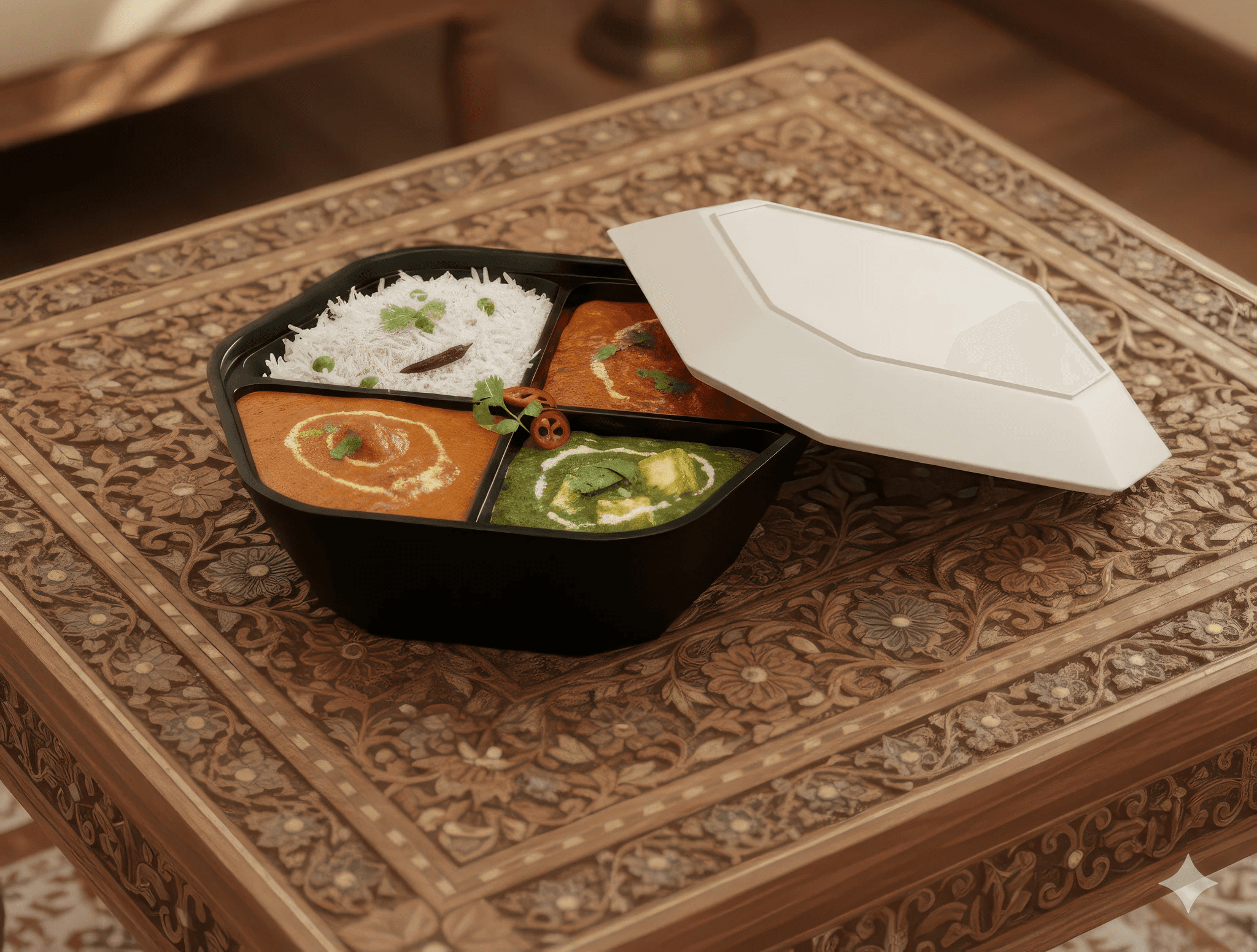
Developed a lightweight, recyclable food container using Rice Husk + rHDPE, paired with AI-powered waste recollection for a fully circular model.
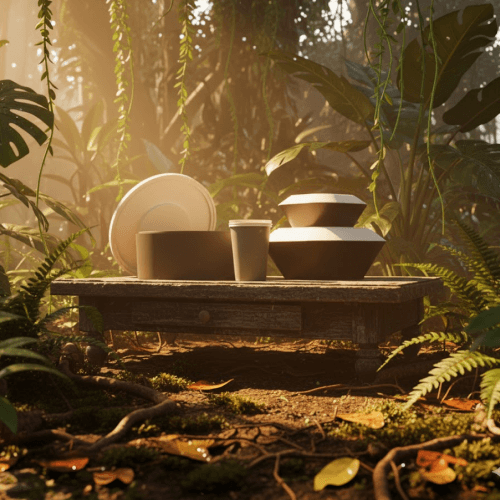
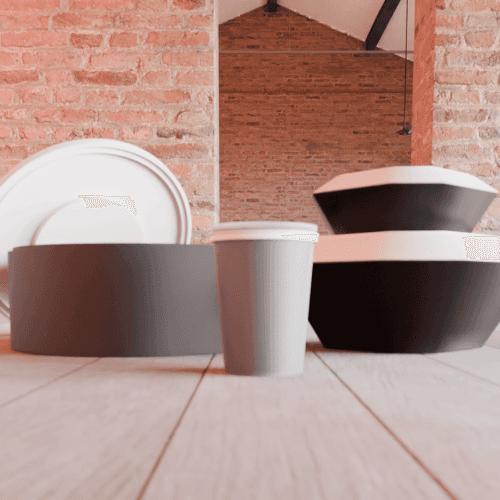
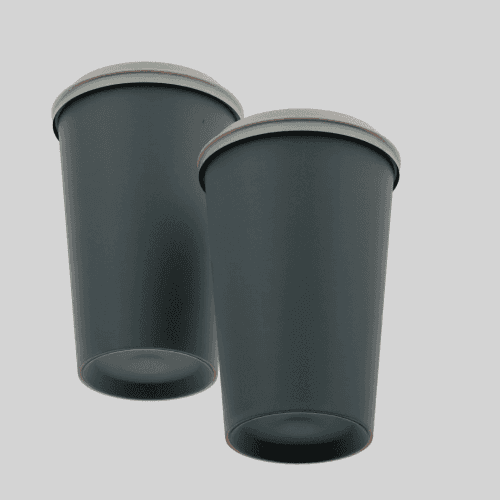
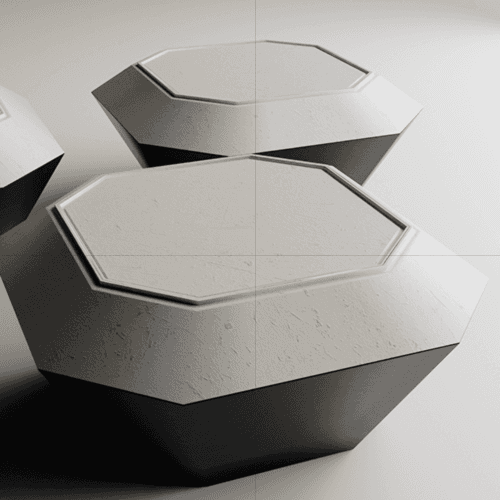
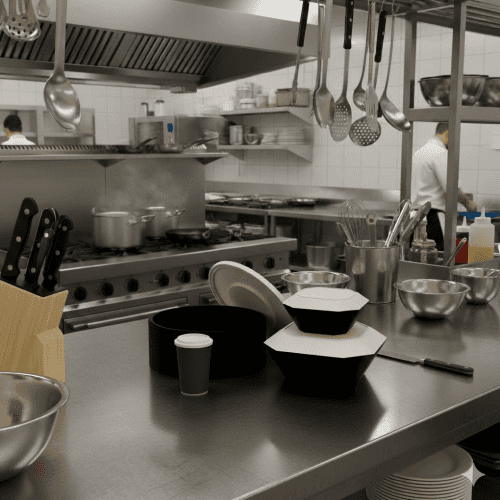
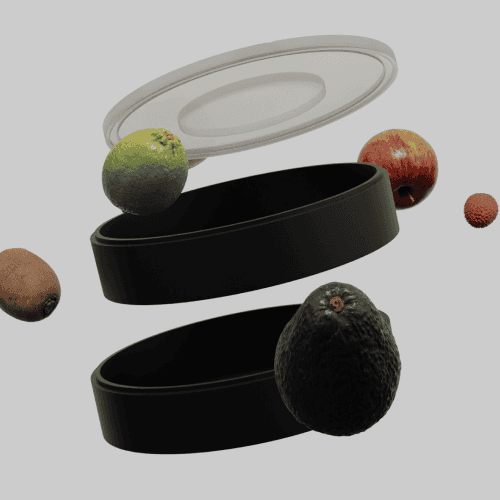
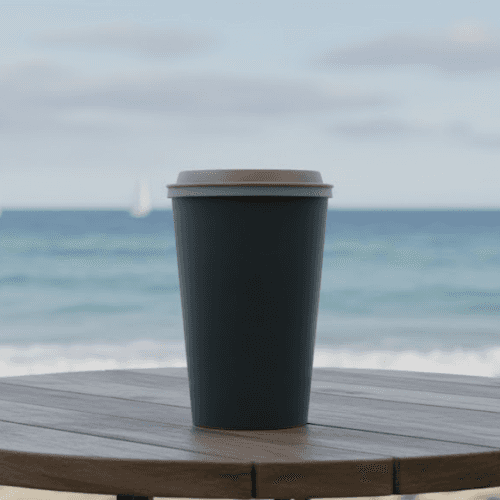
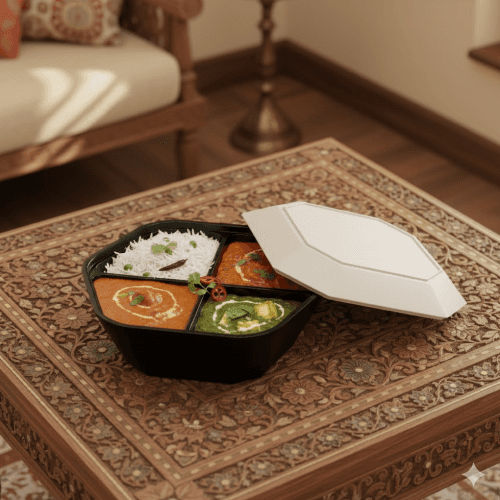
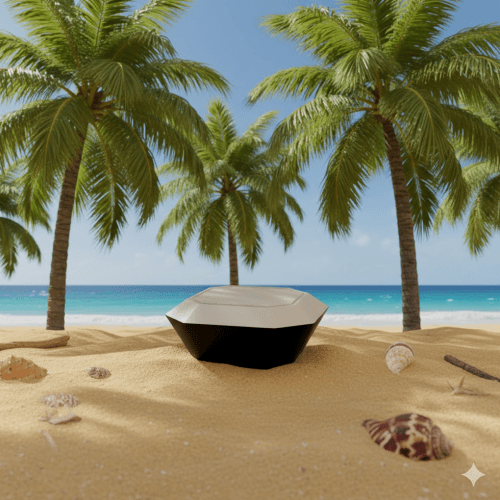
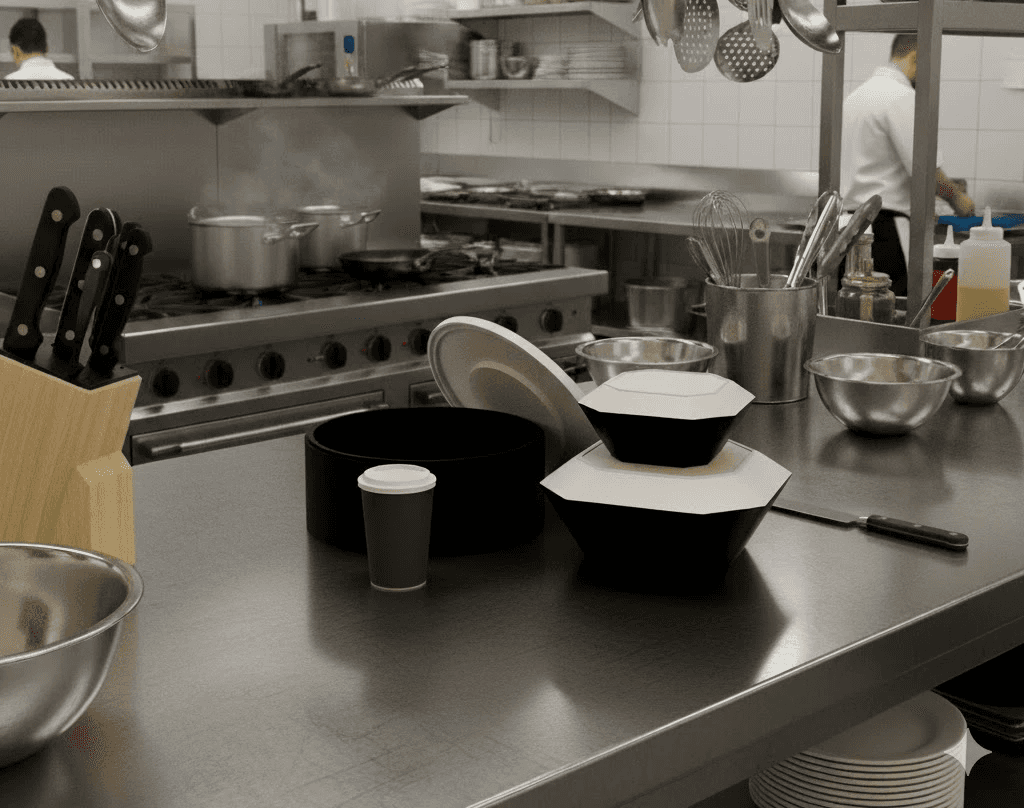
I modeled the entire packaging system in Blender, including container variations (200ml, 500ml, 1L).
Due to rendering constraints on my laptop, I traded off real-life 3D printing to prioritize a detailed animated product video that communicated usability and form.
Core Features
Rice Husk + rHDPE composite → strong, lightweight, heat-retaining, food-safe
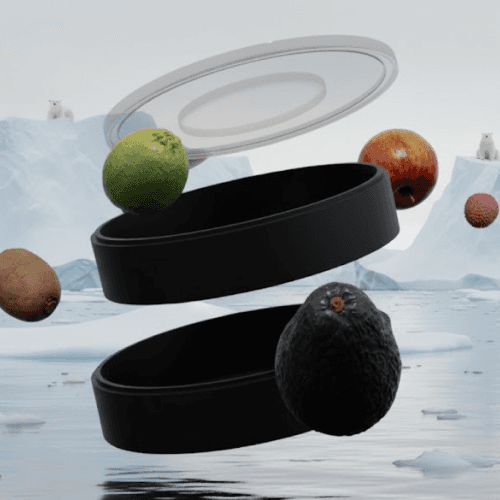
Optimized container shapes → hexagonal, bento, tapered coffee mugs → minimal material use & stackable
Spill-proof & heat-retaining design → interlocking lids, curved interiors
AI-driven recycling system → smart sorting, QR-guided disposal, 80%+ recyclability
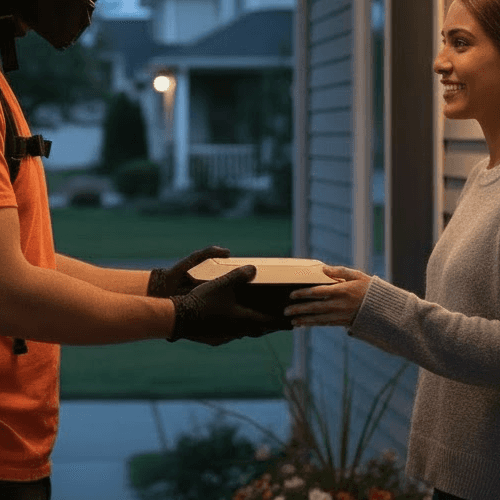
Scalable integration → B2B with Swiggy/Zomato
Results
We reached the finalist round, receiving jury appreciation for best overall idea and business scalability. The project demonstrated a viable alternative to current packaging with 60% lower environmental footprint and 80% recyclability potential.
Created a fully conceptualized, research-backed solution
Developed multiple 3D renders & teaser video
Learned cross-domain collaboration, rapid material analysis, and system-level sustainability design
What I’d Improve
Given more time, I would have prototyped physical models to test spill-proofing and thermal endurance, validating hypotheses from simulation.
Physical prototyping / 3D printing of containers
User testing with food delivery scenarios
Detailed AI implementation demonstration
Deep research yields better long-term impact than obvious solutions
Teamwork across disciplines → accelerated ideation and problem solving
Time constraints teach prioritization & trade-off management