Default image

Locomo-Indian logistics platform

Logistics

Transportation Tech

UX Design

Mobile App

Indian Market

Freight Marketplace

Driver Empowerment

TEAM

Solo Project

MY ROLE

UX Researcher & Designer

DURATION

8 weeks

Premise

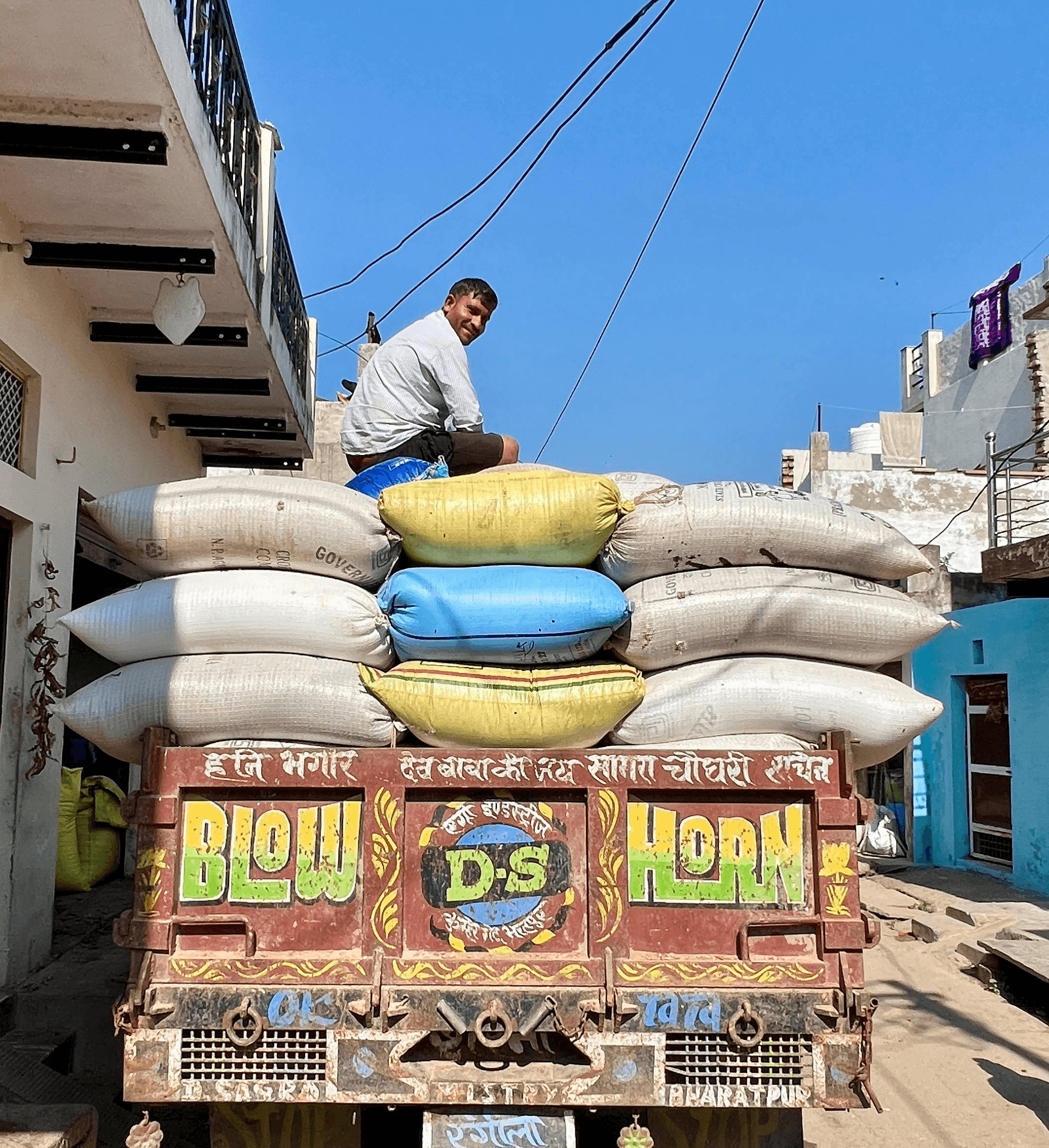
I hitchhiked a ride from Dehradun to Delhi, sat in the cockpit of a Punjab-registered truck, and realized that the “engine” of India’s economy runs on 15–16 active days per month — while the cab stays silent the rest. Locomo was born from that ride: a digital platform conceived to bridge a broken trucking ecosystem by giving independent drivers and small fleet owners a transparent, fair, and digital way to find loads, plan journeys, and reclaim dignity on the road.
Problem Statement

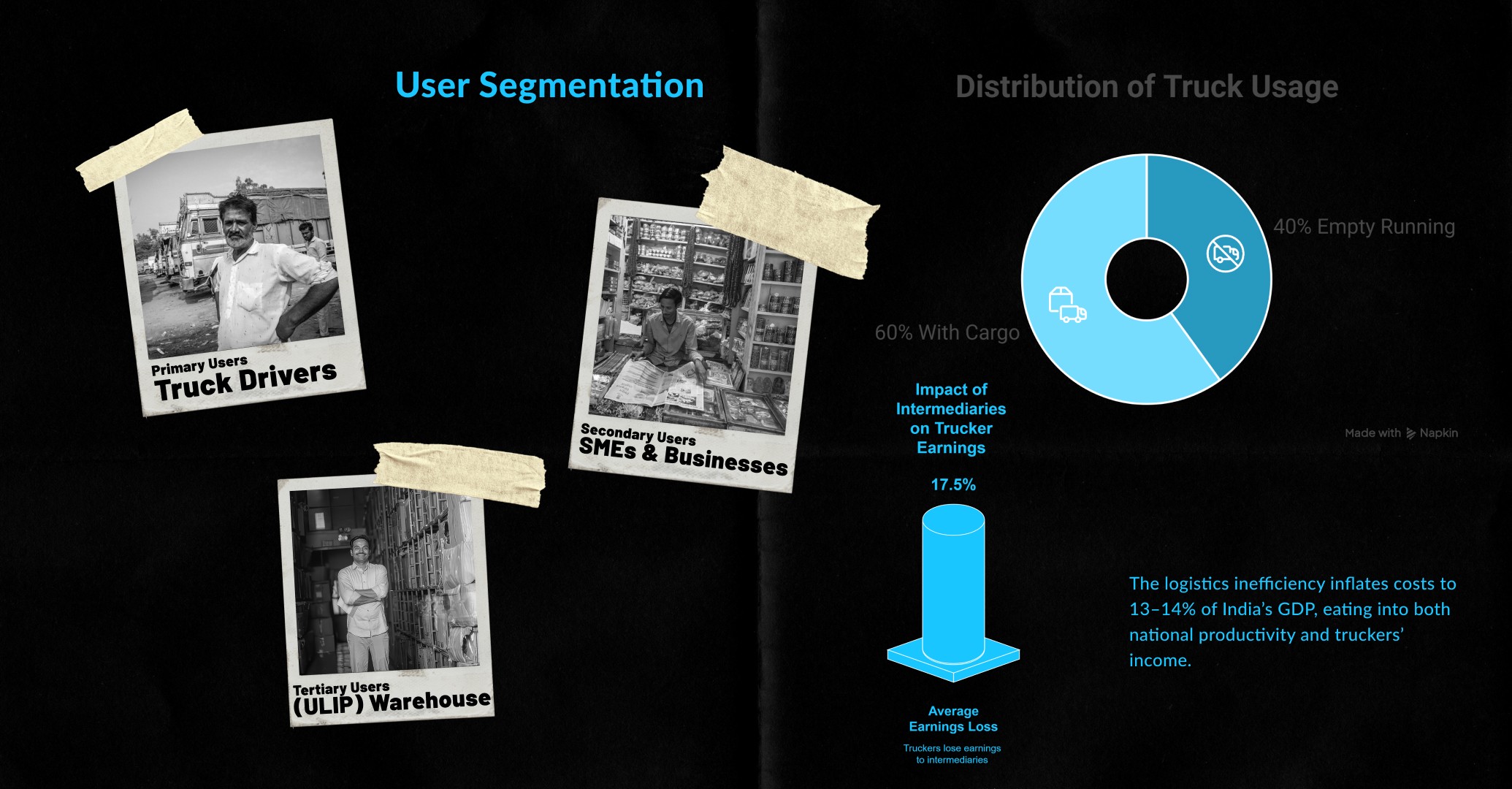
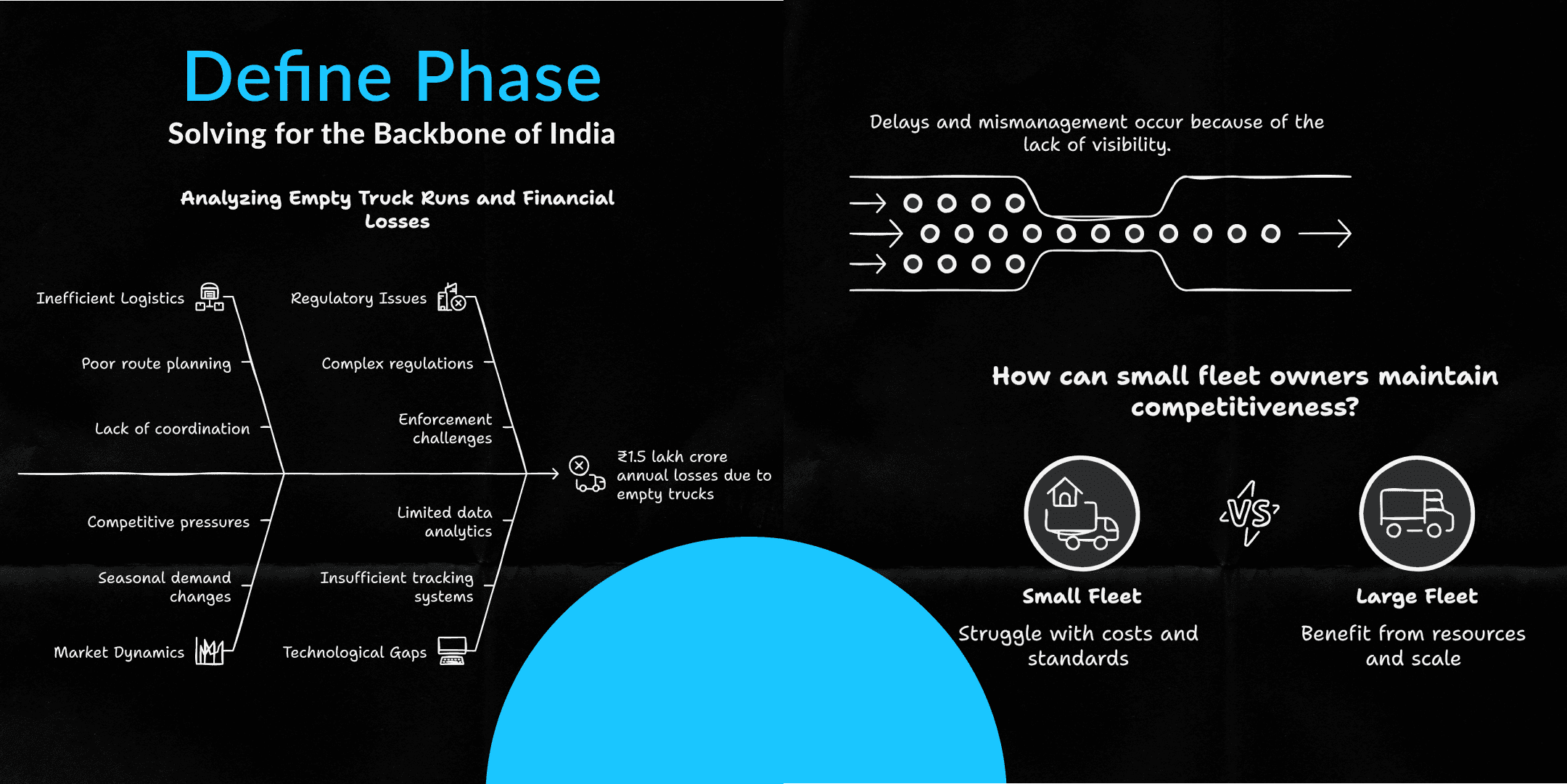
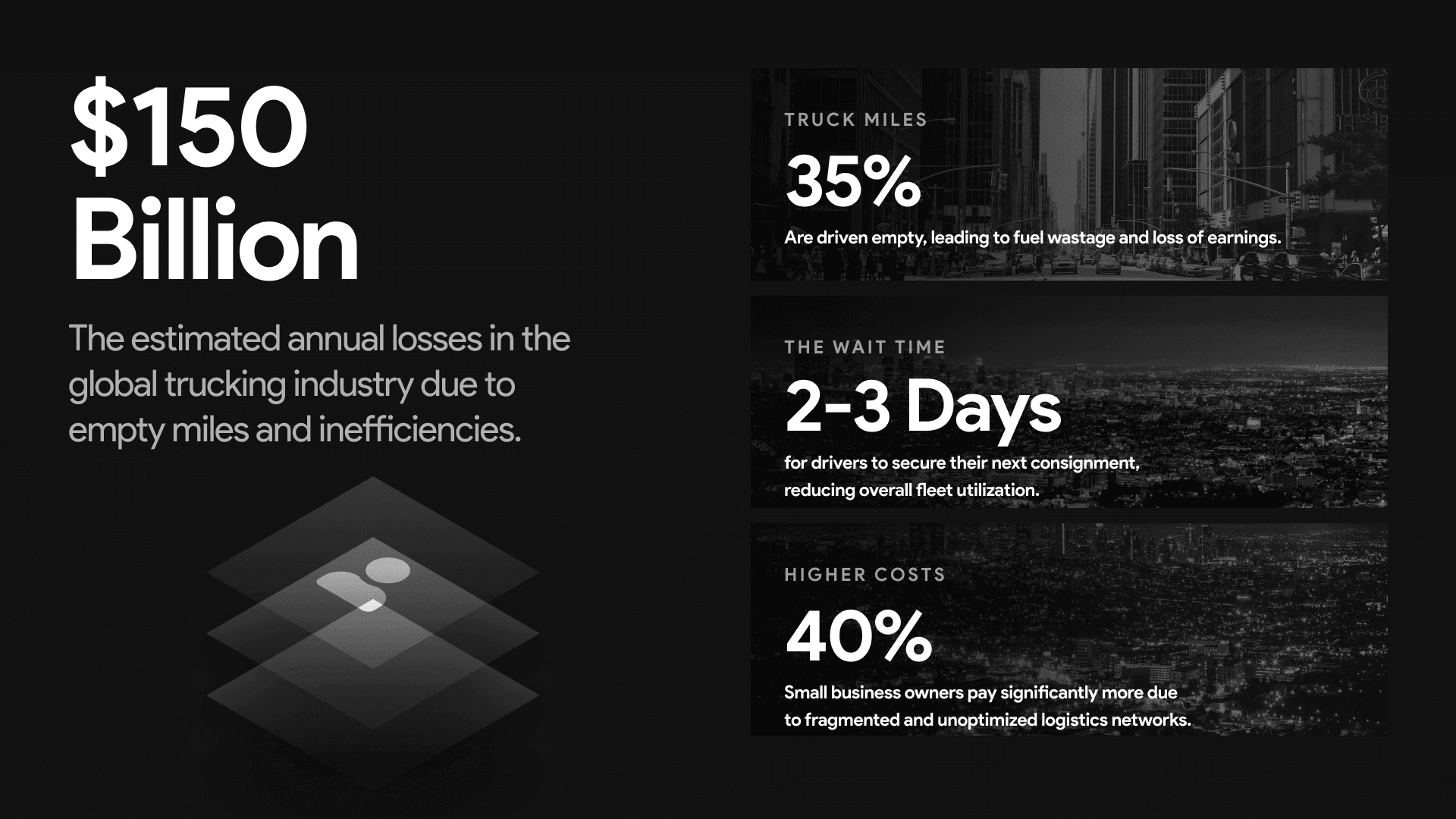
The road-logistics sector in India is highly skewed and fragmented: 60% of freight moves by road despite rail being far cheaper, trucks average only ~300 km/day versus 500–800 km globally, and empty-running rates soar to 40%.** Without systemic connectivity and transparency, the engine sputters.

Independent truck drivers and small fleet owners are left on the margins. Drivers earn ₹7,000-₹30,000/month for life-risking work, pay bribes of ₹1,500-3,000 per trip, and spend weeks away from family. MSMEs struggle to find vetted carriers and transparent pricing. The human cost is enormous.

If nothing changes, inefficiency keeps logistics costs at ~13–14% of GDP, drivers remain invisible, and the wheels of supply chains keep spinning on worn treads. The opportunity for dignity and optimization will slip past.

The road-logistics sector in India is highly skewed and fragmented: 60% of freight moves by road despite rail being far cheaper, trucks average only ~300 km/day versus 500–800 km globally, and empty-running rates soar to 40%.** Without systemic connectivity and transparency, the engine sputters.

Independent truck drivers and small fleet owners are left on the margins. Drivers earn ₹7,000-₹30,000/month for life-risking work, pay bribes of ₹1,500-3,000 per trip, and spend weeks away from family. MSMEs struggle to find vetted carriers and transparent pricing. The human cost is enormous.

If nothing changes, inefficiency keeps logistics costs at ~13–14% of GDP, drivers remain invisible, and the wheels of supply chains keep spinning on worn treads. The opportunity for dignity and optimization will slip past.

The road-logistics sector in India is highly skewed and fragmented: 60% of freight moves by road despite rail being far cheaper, trucks average only ~300 km/day versus 500–800 km globally, and empty-running rates soar to 40%.** Without systemic connectivity and transparency, the engine sputters.

Independent truck drivers and small fleet owners are left on the margins. Drivers earn ₹7,000-₹30,000/month for life-risking work, pay bribes of ₹1,500-3,000 per trip, and spend weeks away from family. MSMEs struggle to find vetted carriers and transparent pricing. The human cost is enormous.

If nothing changes, inefficiency keeps logistics costs at ~13–14% of GDP, drivers remain invisible, and the wheels of supply chains keep spinning on worn treads. The opportunity for dignity and optimization will slip past.

The road-logistics sector in India is highly skewed and fragmented: 60% of freight moves by road despite rail being far cheaper, trucks average only ~300 km/day versus 500–800 km globally, and empty-running rates soar to 40%.** Without systemic connectivity and transparency, the engine sputters.

Independent truck drivers and small fleet owners are left on the margins. Drivers earn ₹7,000-₹30,000/month for life-risking work, pay bribes of ₹1,500-3,000 per trip, and spend weeks away from family. MSMEs struggle to find vetted carriers and transparent pricing. The human cost is enormous.

If nothing changes, inefficiency keeps logistics costs at ~13–14% of GDP, drivers remain invisible, and the wheels of supply chains keep spinning on worn treads. The opportunity for dignity and optimization will slip past.

RESEARCH

Approach

I conducted in-depth interviews with seven drivers (e.g., Puran Singh, Ankur Rawat) and one large fleet owner. The bold truth emerged: drivers routinely face bribes, over-work 14-hour days, and miss home for months — while fleet owners lose weeks waiting for back-loads. These grounded narratives broke abstractions and anchored the design in lived realities.

I conducted in-depth interviews with seven drivers (e.g., Puran Singh, Ankur Rawat) and one large fleet owner. The bold truth emerged: drivers routinely face bribes, over-work 14-hour days, and miss home for months — while fleet owners lose weeks waiting for back-loads. These grounded narratives broke abstractions and anchored the design in lived realities.

I conducted in-depth interviews with seven drivers (e.g., Puran Singh, Ankur Rawat) and one large fleet owner. The bold truth emerged: drivers routinely face bribes, over-work 14-hour days, and miss home for months — while fleet owners lose weeks waiting for back-loads. These grounded narratives broke abstractions and anchored the design in lived realities.

I conducted in-depth interviews with seven drivers (e.g., Puran Singh, Ankur Rawat) and one large fleet owner. The bold truth emerged: drivers routinely face bribes, over-work 14-hour days, and miss home for months — while fleet owners lose weeks waiting for back-loads. These grounded narratives broke abstractions and anchored the design in lived realities.

Approach

Secondary analysis of the National Logistics Policy (NLP) and Unified Logistics Interface Platform (ULIP) revealed a policy push for digital freight exchanges, 102 APIs linking 30 systems, and a target of <10% logistics cost of GDP by 2030. But the human layer was missing.

Drivers Don’t Need More Data — They Need Guidance

By decoding India’s National Logistics Policy (NLP) and Unified Logistics Interface Platform (ULIP). However, the research revealed that policy doesn’t equal usability. While ULIP promises visibility and backhaul optimization, its success hinges on how easily a driver can act on that data — leading to the idea of a guided, human-centered “Journey Map” layer atop ULIP’s technical foundation.

Virtual Interviews with Drivers (Delhi, Dehradun, Himachal)

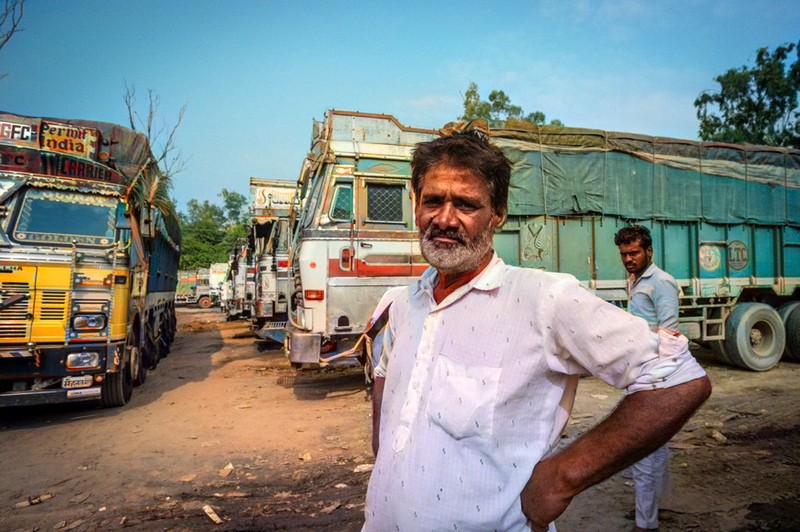
Each one had the same refrain — “Time is money, but corruption costs time.” They hide cash inside documents to pay off RTOs, bathe once every 8–9 days, and cook inside their cabins. These raw insights exposed how endless fatigue, lost family time, and systemic distrust defined their reality.

Empathy Mapping — The Invisible Workers of India’s Highways

Each empathy map exposed a complex human behind the steering wheel: pride mixed with pain, courage blended with despair. Puran Singh hides guilt for missing family, Ankur accepts death as routine, and Ramchandra, a college graduate, feels “educated but trapped.” These stories underscored that any solution had to restore respect — not just efficiency — through features that acknowledged their emotions and constraints.

Market & Tech Landscape Scan

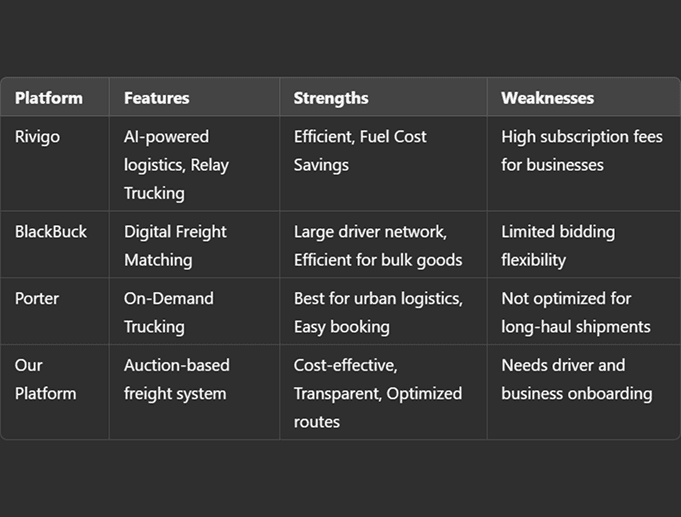
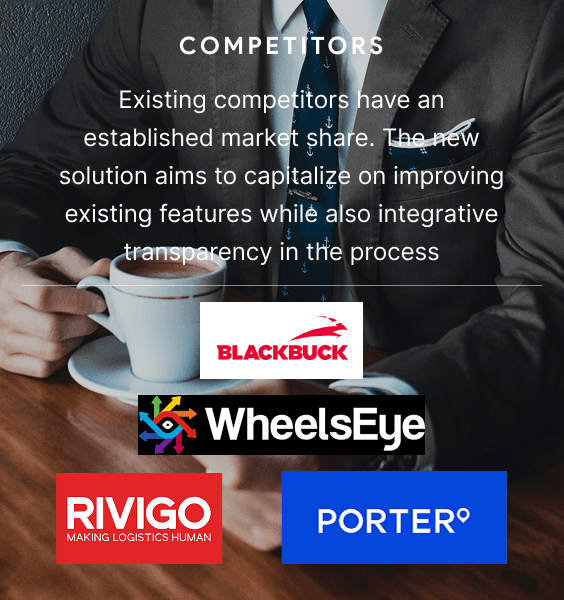
I evaluated 10+ freight and logistics platforms, from Rivigo to TruckSuvidha. None catered to the single-truck owner or driver demographic — interfaces were text-heavy, English-first, and transactional. Drivers described them as “apps for offices, not for roads.” This gap revealed an opportunity to design for trust and emotional relief, not just data — which ultimately inspired Locomo’s Guided Map System that lets drivers plan routes, rest stops, and food breaks like co-drivers on their own terms.

Drivers Don’t Need More Data — They Need Guidance

By decoding India’s National Logistics Policy (NLP) and Unified Logistics Interface Platform (ULIP). However, the research revealed that policy doesn’t equal usability. While ULIP promises visibility and backhaul optimization, its success hinges on how easily a driver can act on that data — leading to the idea of a guided, human-centered “Journey Map” layer atop ULIP’s technical foundation.

Virtual Interviews with Drivers (Delhi, Dehradun, Himachal)

Each one had the same refrain — “Time is money, but corruption costs time.” They hide cash inside documents to pay off RTOs, bathe once every 8–9 days, and cook inside their cabins. These raw insights exposed how endless fatigue, lost family time, and systemic distrust defined their reality.

Empathy Mapping — The Invisible Workers of India’s Highways

Each empathy map exposed a complex human behind the steering wheel: pride mixed with pain, courage blended with despair. Puran Singh hides guilt for missing family, Ankur accepts death as routine, and Ramchandra, a college graduate, feels “educated but trapped.” These stories underscored that any solution had to restore respect — not just efficiency — through features that acknowledged their emotions and constraints.

Market & Tech Landscape Scan

I evaluated 10+ freight and logistics platforms, from Rivigo to TruckSuvidha. None catered to the single-truck owner or driver demographic — interfaces were text-heavy, English-first, and transactional. Drivers described them as “apps for offices, not for roads.” This gap revealed an opportunity to design for trust and emotional relief, not just data — which ultimately inspired Locomo’s Guided Map System that lets drivers plan routes, rest stops, and food breaks like co-drivers on their own terms.

Drivers Don’t Need More Data — They Need Guidance

By decoding India’s National Logistics Policy (NLP) and Unified Logistics Interface Platform (ULIP). However, the research revealed that policy doesn’t equal usability. While ULIP promises visibility and backhaul optimization, its success hinges on how easily a driver can act on that data — leading to the idea of a guided, human-centered “Journey Map” layer atop ULIP’s technical foundation.

Virtual Interviews with Drivers (Delhi, Dehradun, Himachal)

Each one had the same refrain — “Time is money, but corruption costs time.” They hide cash inside documents to pay off RTOs, bathe once every 8–9 days, and cook inside their cabins. These raw insights exposed how endless fatigue, lost family time, and systemic distrust defined their reality.

Empathy Mapping — The Invisible Workers of India’s Highways

Each empathy map exposed a complex human behind the steering wheel: pride mixed with pain, courage blended with despair. Puran Singh hides guilt for missing family, Ankur accepts death as routine, and Ramchandra, a college graduate, feels “educated but trapped.” These stories underscored that any solution had to restore respect — not just efficiency — through features that acknowledged their emotions and constraints.

Market & Tech Landscape Scan

I evaluated 10+ freight and logistics platforms, from Rivigo to TruckSuvidha. None catered to the single-truck owner or driver demographic — interfaces were text-heavy, English-first, and transactional. Drivers described them as “apps for offices, not for roads.” This gap revealed an opportunity to design for trust and emotional relief, not just data — which ultimately inspired Locomo’s Guided Map System that lets drivers plan routes, rest stops, and food breaks like co-drivers on their own terms.

Drivers Don’t Need More Data — They Need Guidance

By decoding India’s National Logistics Policy (NLP) and Unified Logistics Interface Platform (ULIP). However, the research revealed that policy doesn’t equal usability. While ULIP promises visibility and backhaul optimization, its success hinges on how easily a driver can act on that data — leading to the idea of a guided, human-centered “Journey Map” layer atop ULIP’s technical foundation.

Virtual Interviews with Drivers (Delhi, Dehradun, Himachal)

Each one had the same refrain — “Time is money, but corruption costs time.” They hide cash inside documents to pay off RTOs, bathe once every 8–9 days, and cook inside their cabins. These raw insights exposed how endless fatigue, lost family time, and systemic distrust defined their reality.

Empathy Mapping — The Invisible Workers of India’s Highways

Each empathy map exposed a complex human behind the steering wheel: pride mixed with pain, courage blended with despair. Puran Singh hides guilt for missing family, Ankur accepts death as routine, and Ramchandra, a college graduate, feels “educated but trapped.” These stories underscored that any solution had to restore respect — not just efficiency — through features that acknowledged their emotions and constraints.

Market & Tech Landscape Scan

I evaluated 10+ freight and logistics platforms, from Rivigo to TruckSuvidha. None catered to the single-truck owner or driver demographic — interfaces were text-heavy, English-first, and transactional. Drivers described them as “apps for offices, not for roads.” This gap revealed an opportunity to design for trust and emotional relief, not just data — which ultimately inspired Locomo’s Guided Map System that lets drivers plan routes, rest stops, and food breaks like co-drivers on their own terms.

Insights

I began by immersing myself in their world — watching countless driver interviews on YouTube and revisiting a personal experience that shaped my empathy: once, stranded on the Dehradun–Delhi highway, I was offered a lift by two truckers, Rajat and Ajay.

TOP INSIGHTS
Drivers Don’t Need More Data — They Need Guidance

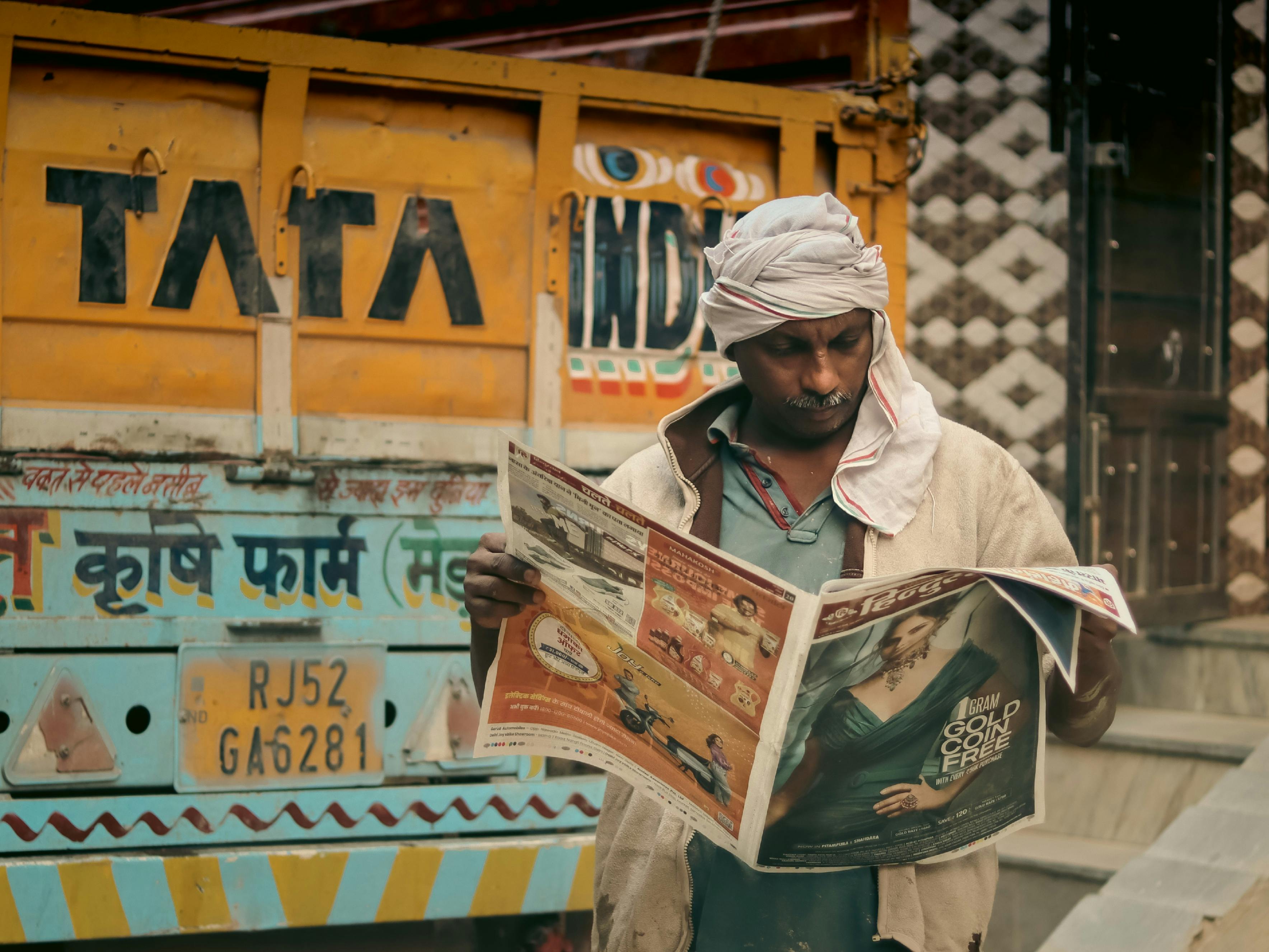
Research revealed that most drivers already know India’s roads better than any GPS. What they lack is structure and foresight — where to stop, where to eat, where to sleep safely. A Guided Map experience solves this: it pre-plans rest stops, refueling, and verified dhabas so drivers don’t overextend or gamble with fatigue. It shifts design from “route optimization” to human optimization — helping them arrive alive, not just on time.

Dignity Is a Design Feature, Not a Metric

Every driver interviewed mentioned guilt and exhaustion — missing milestones, sleeping in heat, fearing harassment. Locomo reframes this pain into UX opportunity: predictive journey planning, trusted food & rest points, and time-bound reminders that say, “You’ve been driving 8 hours — take a break here.” These micro-moments rebuild trust, encourage self-care, and create the emotional bridge between tech efficiency and human empathy.

Drivers Don’t Need More Data — They Need Guidance

Research revealed that most drivers already know India’s roads better than any GPS. What they lack is structure and foresight — where to stop, where to eat, where to sleep safely. A Guided Map experience solves this: it pre-plans rest stops, refueling, and verified dhabas so drivers don’t overextend or gamble with fatigue. It shifts design from “route optimization” to human optimization — helping them arrive alive, not just on time.

Dignity Is a Design Feature, Not a Metric

Every driver interviewed mentioned guilt and exhaustion — missing milestones, sleeping in heat, fearing harassment. Locomo reframes this pain into UX opportunity: predictive journey planning, trusted food & rest points, and time-bound reminders that say, “You’ve been driving 8 hours — take a break here.” These micro-moments rebuild trust, encourage self-care, and create the emotional bridge between tech efficiency and human empathy.

Drivers Don’t Need More Data — They Need Guidance

Research revealed that most drivers already know India’s roads better than any GPS. What they lack is structure and foresight — where to stop, where to eat, where to sleep safely. A Guided Map experience solves this: it pre-plans rest stops, refueling, and verified dhabas so drivers don’t overextend or gamble with fatigue. It shifts design from “route optimization” to human optimization — helping them arrive alive, not just on time.

Dignity Is a Design Feature, Not a Metric

Every driver interviewed mentioned guilt and exhaustion — missing milestones, sleeping in heat, fearing harassment. Locomo reframes this pain into UX opportunity: predictive journey planning, trusted food & rest points, and time-bound reminders that say, “You’ve been driving 8 hours — take a break here.” These micro-moments rebuild trust, encourage self-care, and create the emotional bridge between tech efficiency and human empathy.

Drivers Don’t Need More Data — They Need Guidance

Research revealed that most drivers already know India’s roads better than any GPS. What they lack is structure and foresight — where to stop, where to eat, where to sleep safely. A Guided Map experience solves this: it pre-plans rest stops, refueling, and verified dhabas so drivers don’t overextend or gamble with fatigue. It shifts design from “route optimization” to human optimization — helping them arrive alive, not just on time.

Dignity Is a Design Feature, Not a Metric

Every driver interviewed mentioned guilt and exhaustion — missing milestones, sleeping in heat, fearing harassment. Locomo reframes this pain into UX opportunity: predictive journey planning, trusted food & rest points, and time-bound reminders that say, “You’ve been driving 8 hours — take a break here.” These micro-moments rebuild trust, encourage self-care, and create the emotional bridge between tech efficiency and human empathy.

man in orange and white shirt smiling
man and woman sitting on concrete bench during daytime
a man with a stick walks along a river bank
man in blue and white plaid button up shirt holding green plant
a person holding a stick and a dog in a field

User Persona

Puran Singh, age 42, from rural Rajasthan, owns a single truck and drives Mumbai–Delhi routes (~1500 km each way). He carries his family’s hopes on the highway: he hides cash for bribes, spends months away, and wants his son to become a doctor — not another driver. His need: fair loads, digital freedom, and a way to stop paying middlemen. His motivation: dignity, family time, and control over his future.

WORDS FROM OUR USER

Dear Oliver,

I hope you're doing well! I wanted to share my excitement about creating websites with Framer's intuitive no-code platform.

Let's explore it together!Looking forward to discussing more about our design adventures!

Puran Singh,
“Last month I hid ₹3,000 in my papers so police wouldn’t hold me up. If I fight, I lose time, and time is money. If system gave me trusted loads directly, I wouldn’t carry bribes anymore.”
Thank you.

Ankur Rawat,
“I drive mountain roads where one mistake kills. Earning ₹12,000 for that? I started YouTube so people see it. If platform said, ‘Here’s a safe load, here’s your pay’, maybe I’d believe in digital.”
Thank you.

Ramchandra
“I studied college but now drive 24-hour shifts for ₹7,000/month. I pay ₹2,000 in unofficial fees per trip. If app helped me skip that, maybe I’d keep driving with respect, not fear.”
Thank you.

Dear Oliver,

I hope you're doing well! I wanted to share my excitement about creating websites with Framer's intuitive no-code platform.

Let's explore it together!Looking forward to discussing more about our design adventures!

Puran Singh,
“Last month I hid ₹3,000 in my papers so police wouldn’t hold me up. If I fight, I lose time, and time is money. If system gave me trusted loads directly, I wouldn’t carry bribes anymore.”
Thank you.

Ankur Rawat,
“I drive mountain roads where one mistake kills. Earning ₹12,000 for that? I started YouTube so people see it. If platform said, ‘Here’s a safe load, here’s your pay’, maybe I’d believe in digital.”
Thank you.

Ramchandra
“I studied college but now drive 24-hour shifts for ₹7,000/month. I pay ₹2,000 in unofficial fees per trip. If app helped me skip that, maybe I’d keep driving with respect, not fear.”
Thank you.

Dear Oliver,

I hope you're doing well! I wanted to share my excitement about creating websites with Framer's intuitive no-code platform.

Let's explore it together!Looking forward to discussing more about our design adventures!

Puran Singh,
“Last month I hid ₹3,000 in my papers so police wouldn’t hold me up. If I fight, I lose time, and time is money. If system gave me trusted loads directly, I wouldn’t carry bribes anymore.”
Thank you.

Ankur Rawat,
“I drive mountain roads where one mistake kills. Earning ₹12,000 for that? I started YouTube so people see it. If platform said, ‘Here’s a safe load, here’s your pay’, maybe I’d believe in digital.”
Thank you.

Ramchandra
“I studied college but now drive 24-hour shifts for ₹7,000/month. I pay ₹2,000 in unofficial fees per trip. If app helped me skip that, maybe I’d keep driving with respect, not fear.”
Thank you.

INITIALS CHALLENGES

The great dilemma
Design Strategy

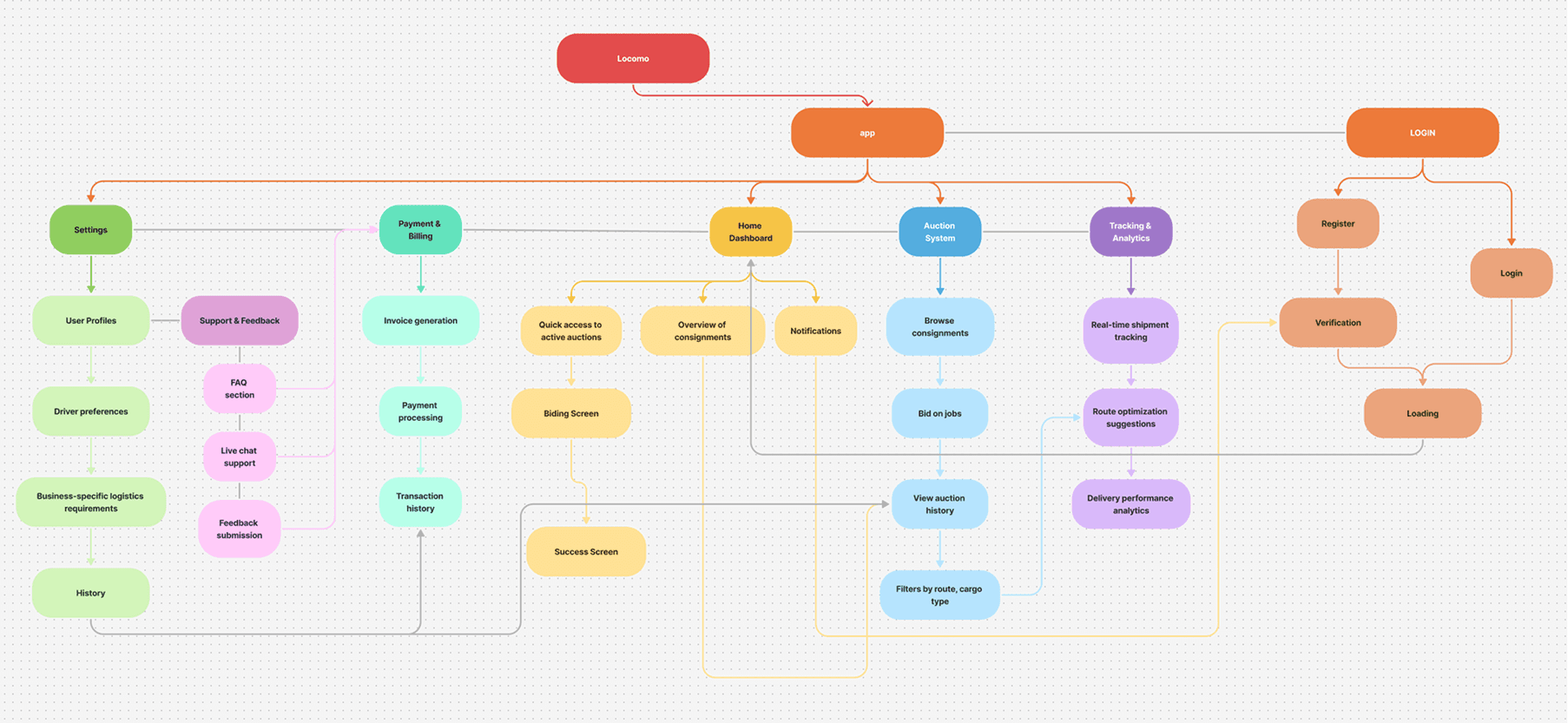
I anchored on three strategic pillars: trust, accessibility, and efficiency. Trust by showing clear auctions, prices and payments; Accessibility through voice UI, icons and offline mode; Efficiency by matching loads and planning return trips so trucks don’t idle 1–3 days. This triad shaped the entire UX architecture and flow.

DECIDING FACTORS

Human-Centered Routing

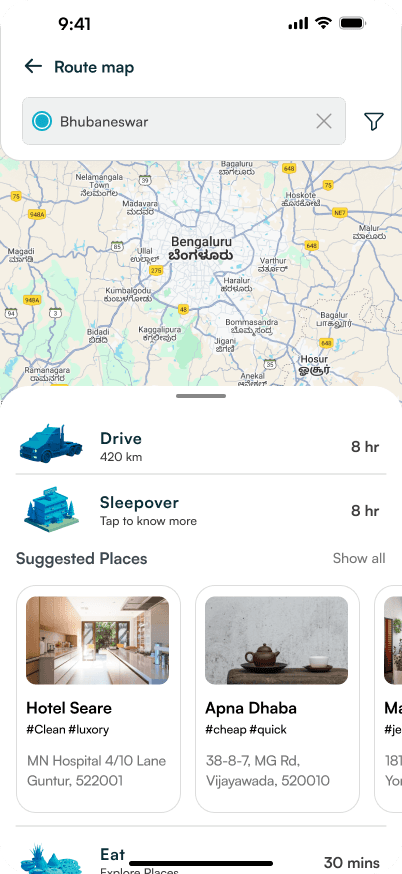
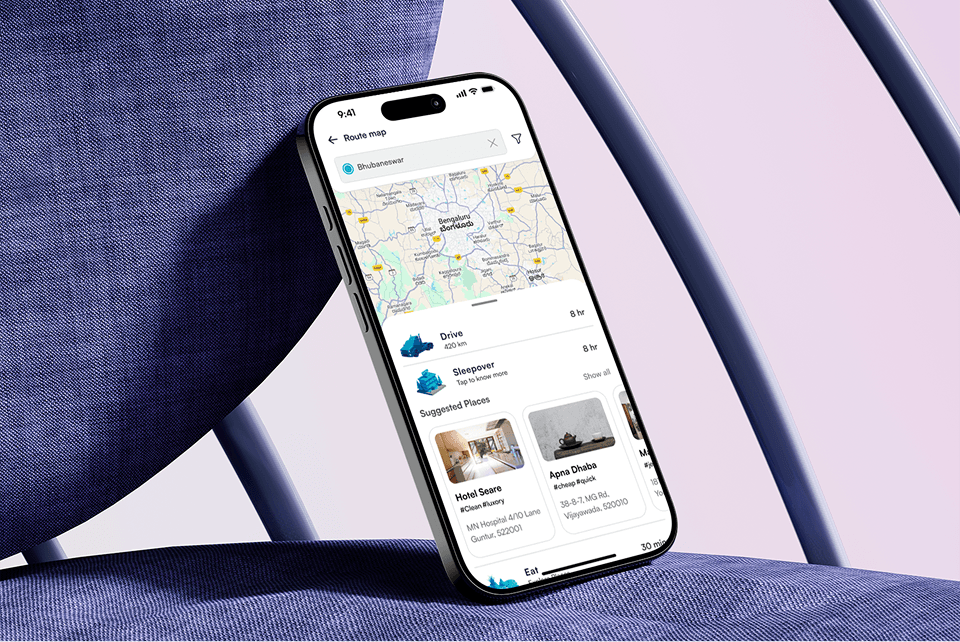
Design the Guided Map System to act like a digital co-driver — suggesting safe rest stops, verified food joints, and fuel stations so drivers can plan ahead and avoid burnout.

Trust Through Transparency

Build visible progress and payment clarity into every interaction — from bidding to delivery — ensuring truckers know exactly where their time and money go.

Dignity by Design

Shift the goal from just faster delivery to healthier, happier journeys. Timed reminders, journey summaries, and rest prompts help rebuild the self-worth of India’s unseen workforce.

Designing

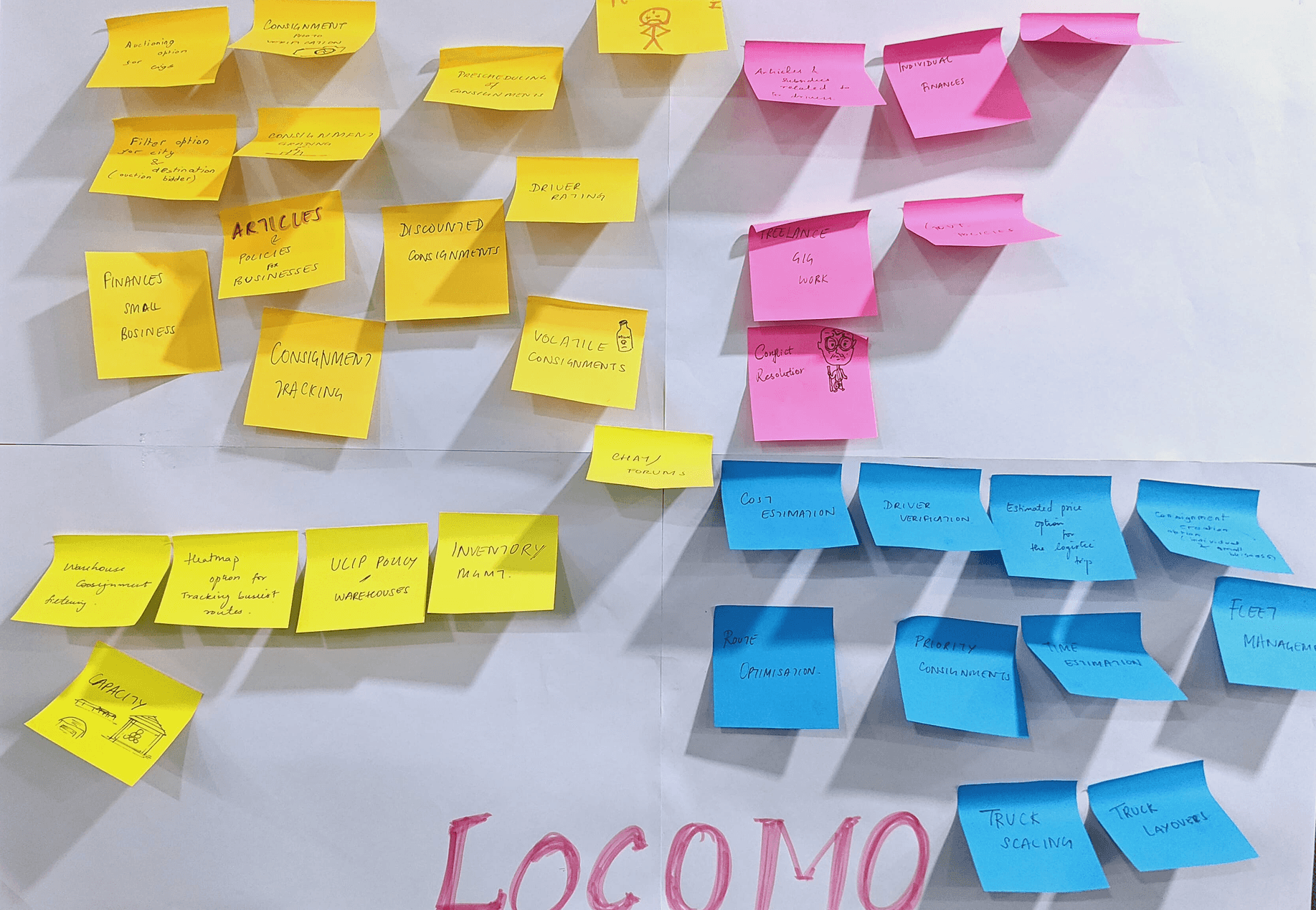
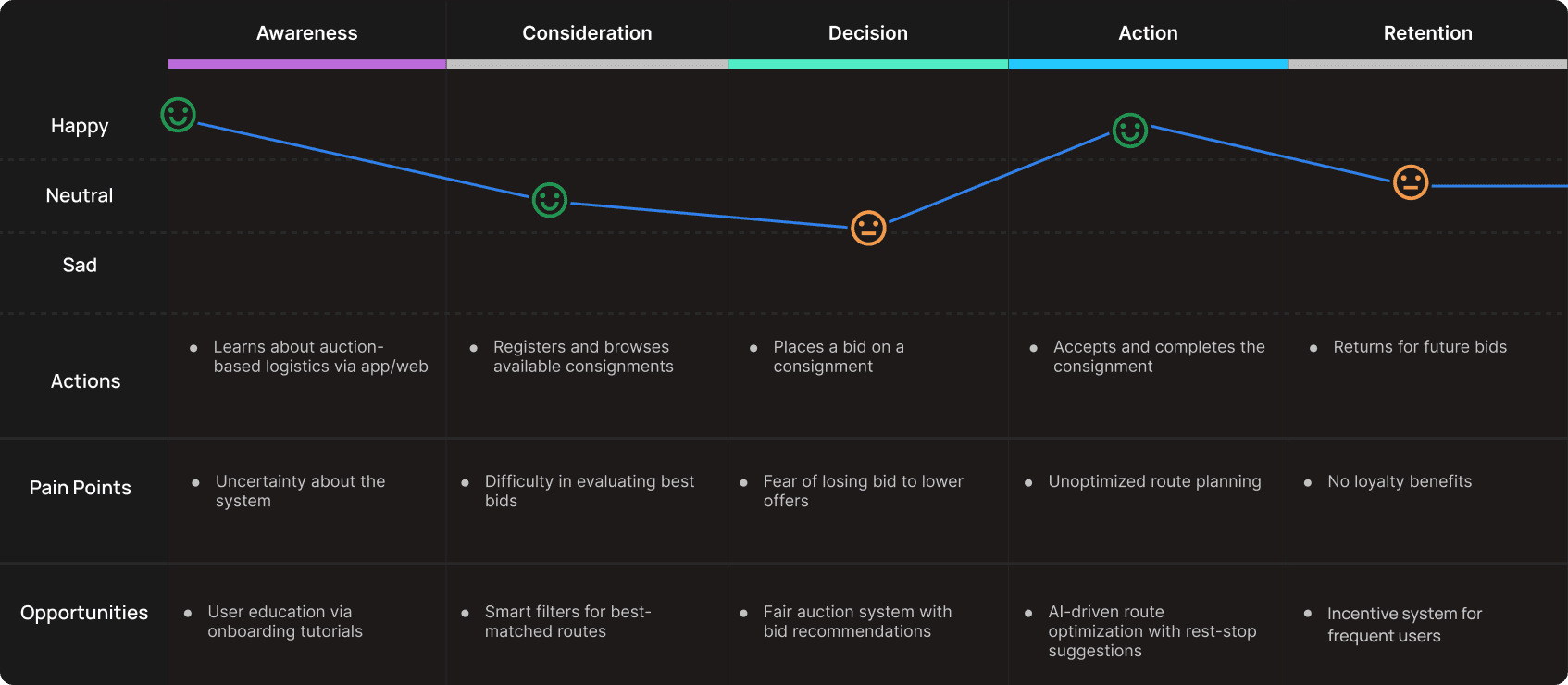
In our ideation phase I sketched Crazy 8s, conducted affinity mapping of interview quotes (“Time is money”; “Police always wants their share”), and built storyboards of a driver missing his son’s birthday because of idle wait time. These visual explorations unlocked empathy-led concepts like the “Journey Planner”, “Backhaul Auction”, and “Rest Stop Guide” modules — each grounded in the real lives of drivers on the road.
01

Load Auction View

02

Competitor Analysis

03

Journey Mapping

04

Prototyping

Flows

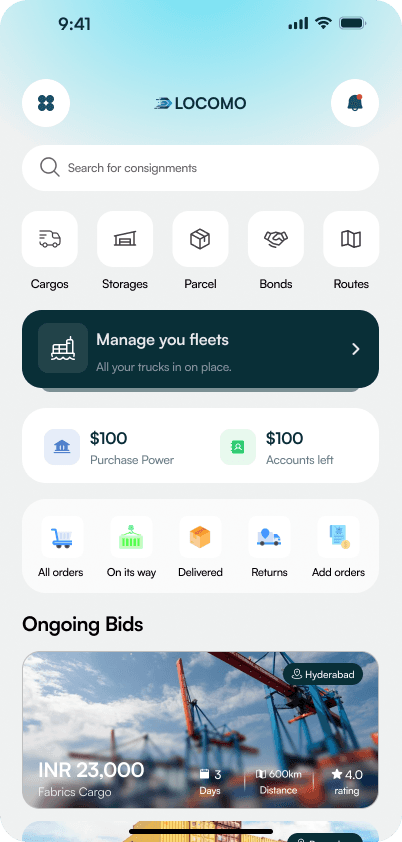
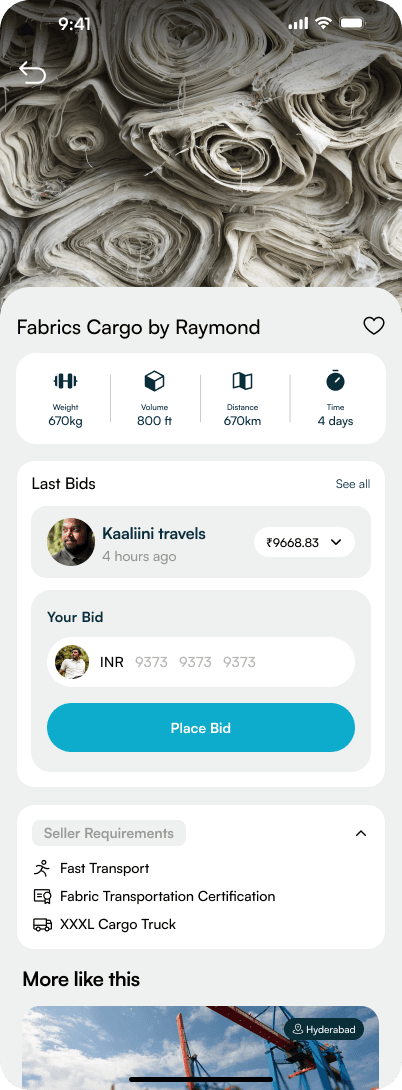
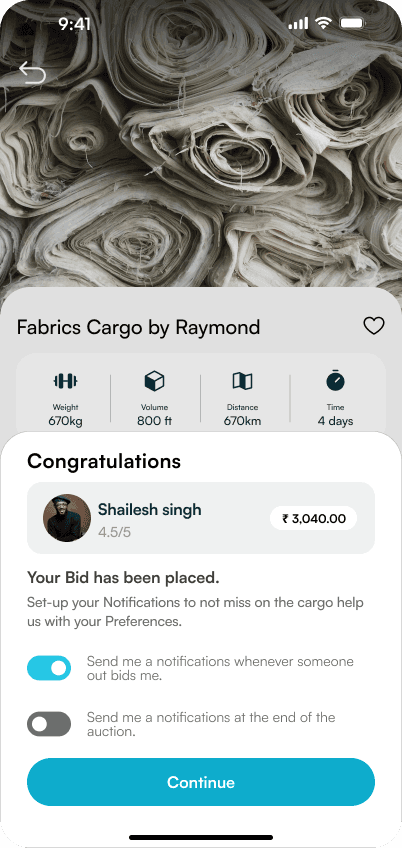
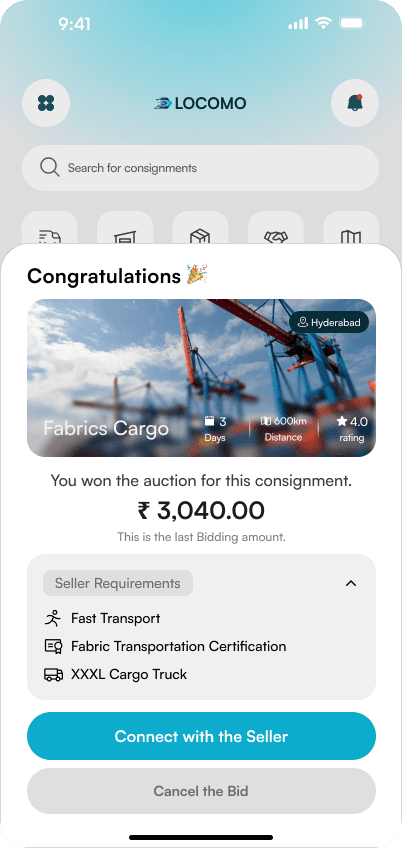
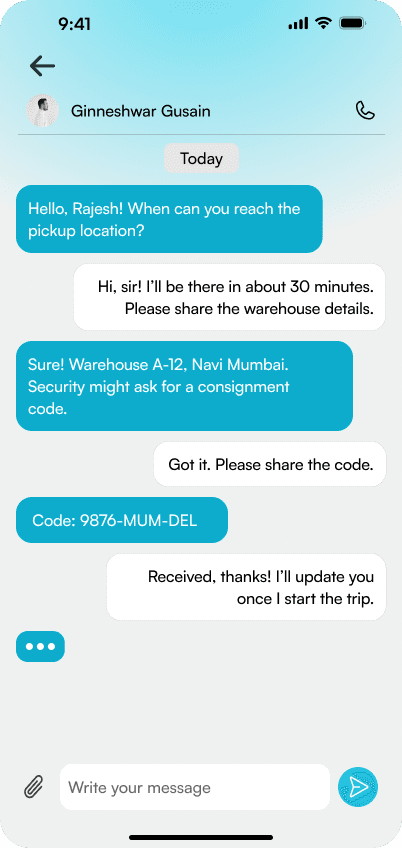
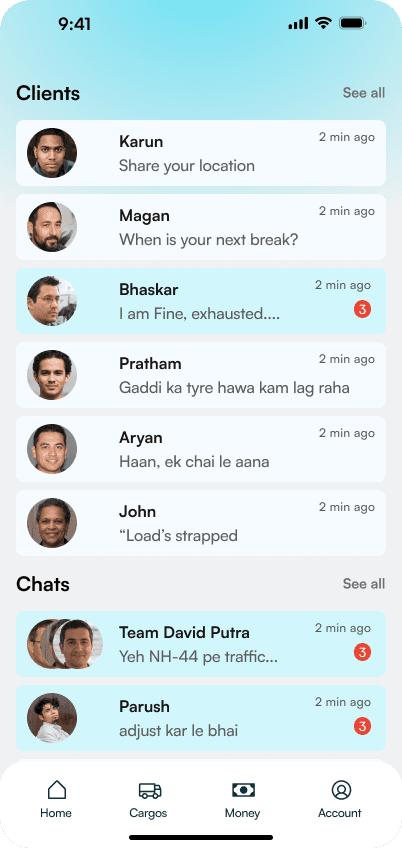
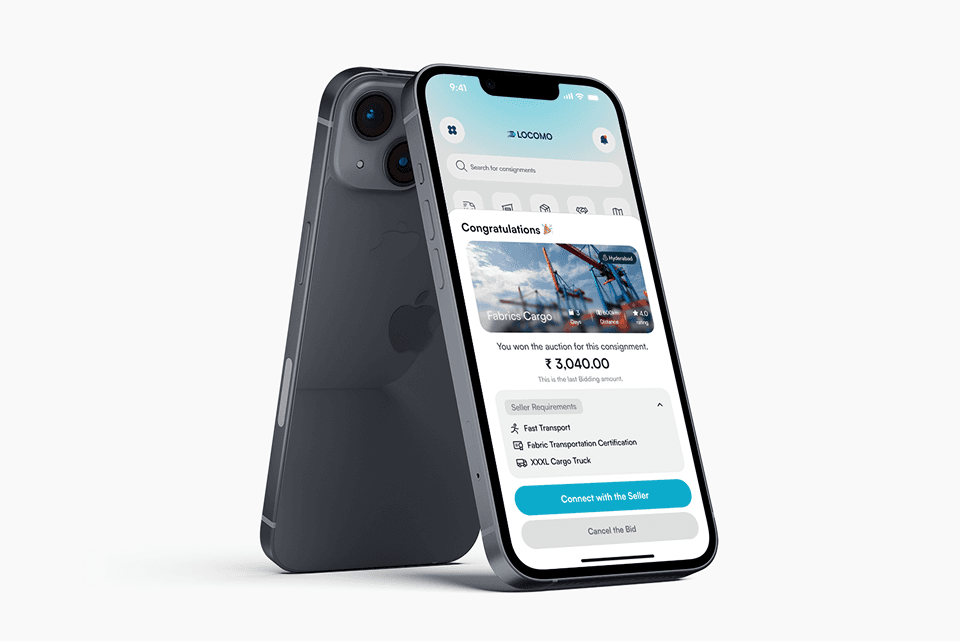
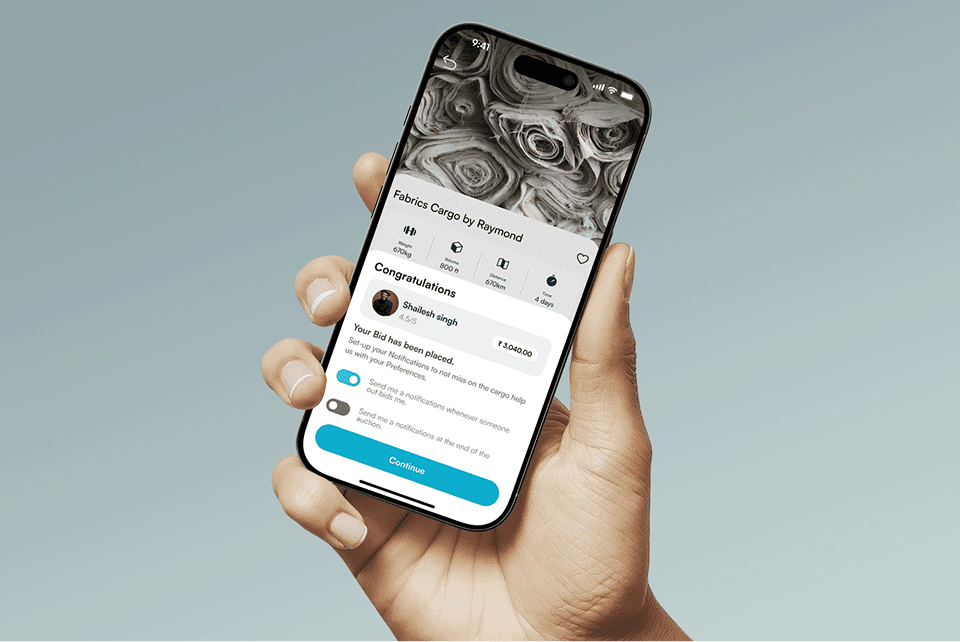
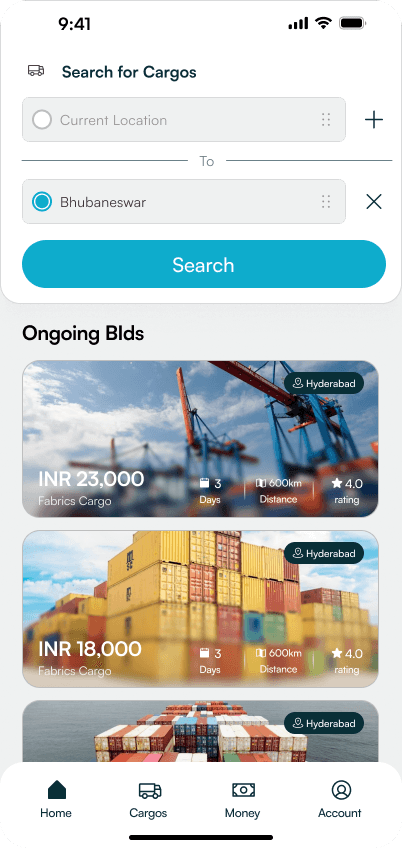
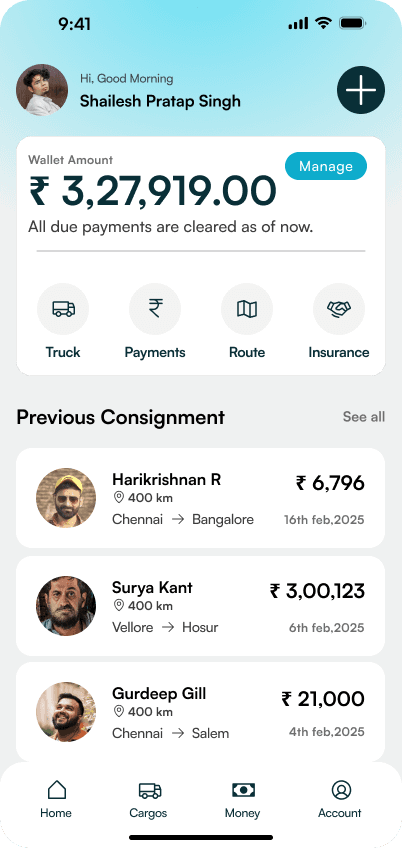
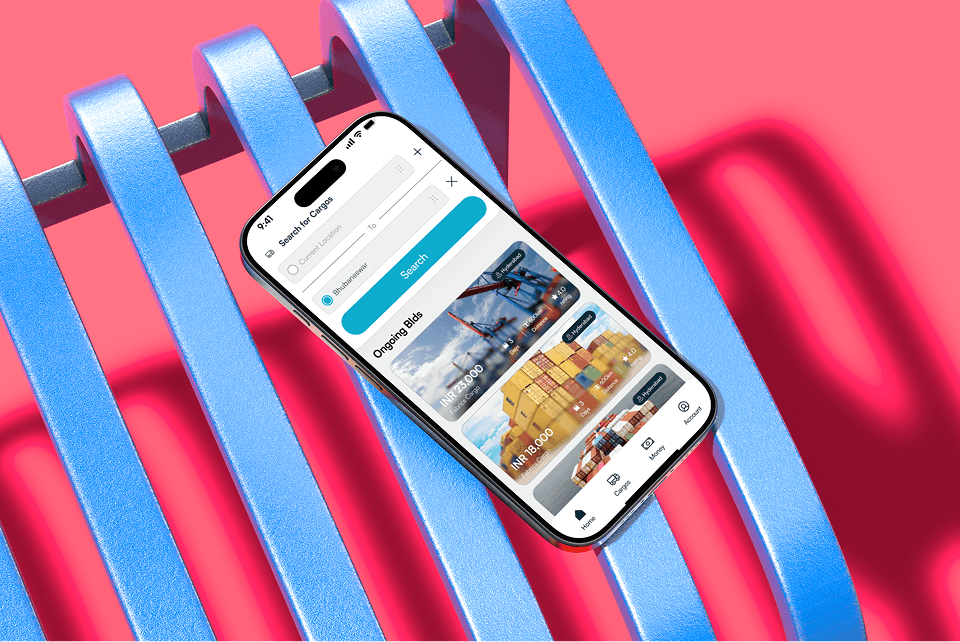
The core flow focused on connecting a driver with a verified load opportunity through an auction-based system.
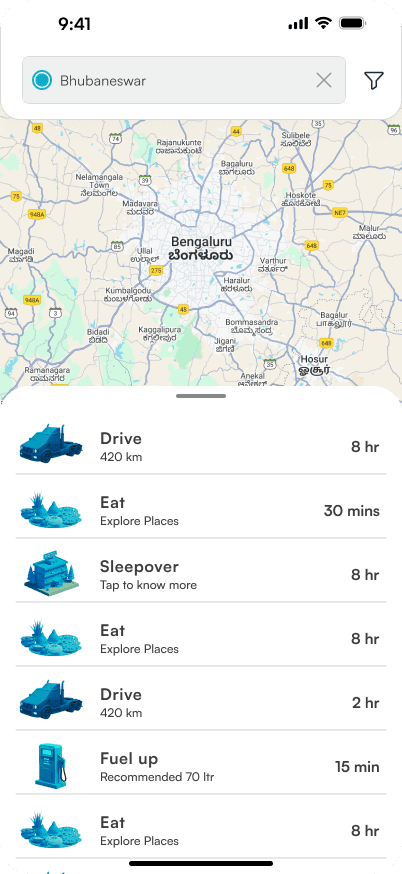
A driver could see routes, available consignments, and expected pay — bid transparently, plan rest stops, and get guided recommendations for motels, fuel stations, and safe halts based on journey length.
Design Decisions:

  • Integrated journey planner to encourage legal driving hours and reduce fatigue.

  • Embedded route-based pitstop suggestions to add humane rhythm to their workdays.

  • Created a minimal interface for quick decision-making while on the road.

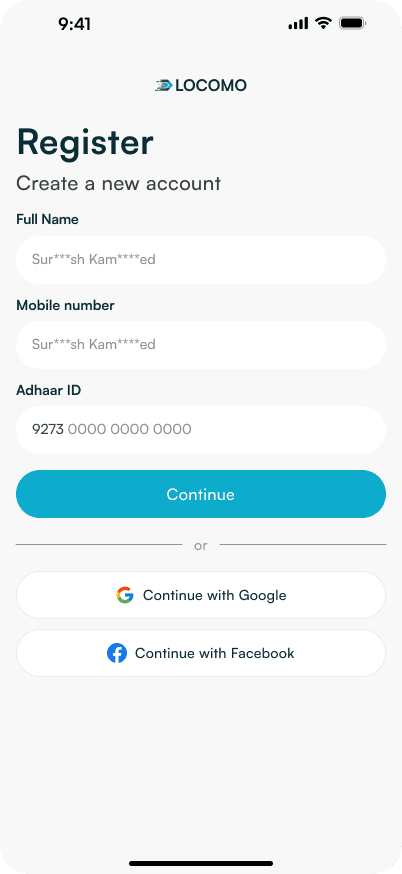
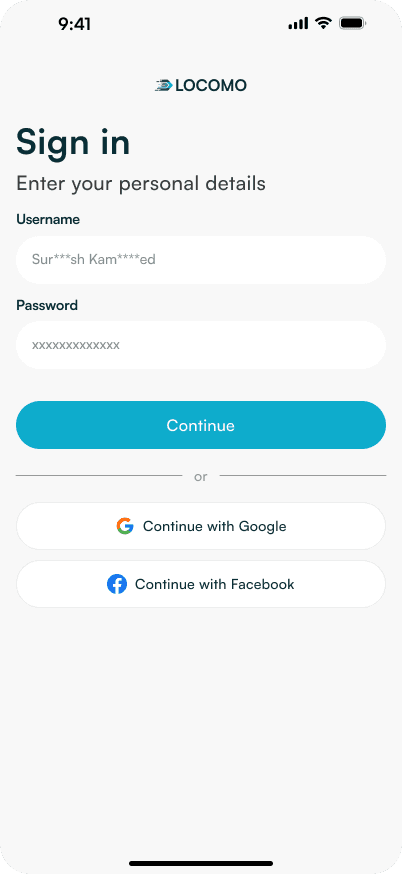
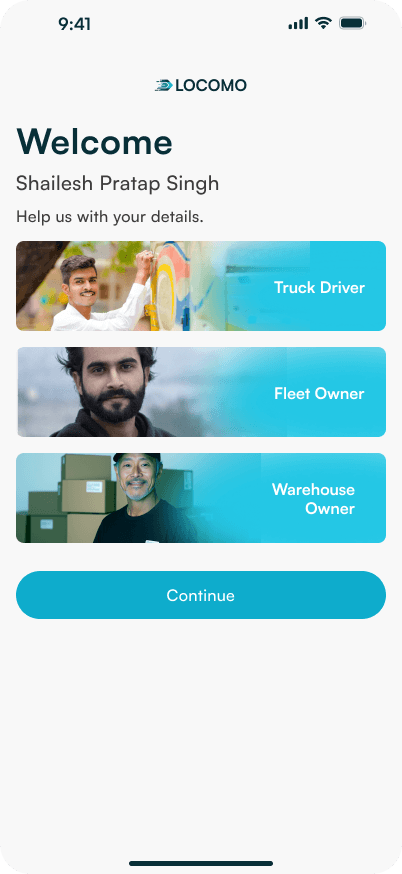
Onbaording

Bidding for Consignment

Payment/Personal Finance

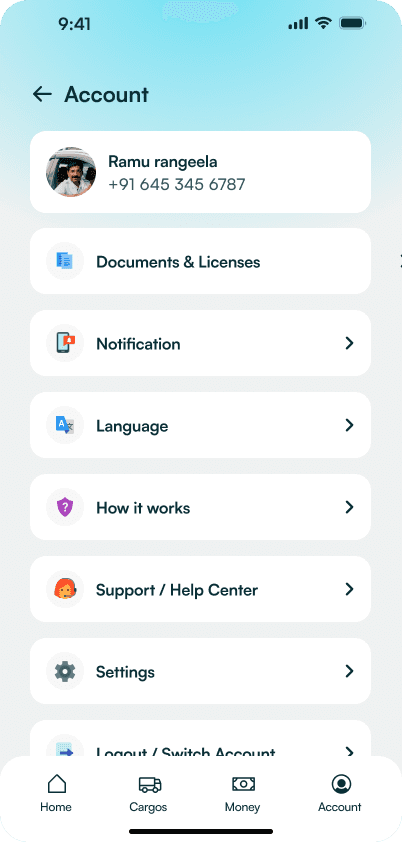
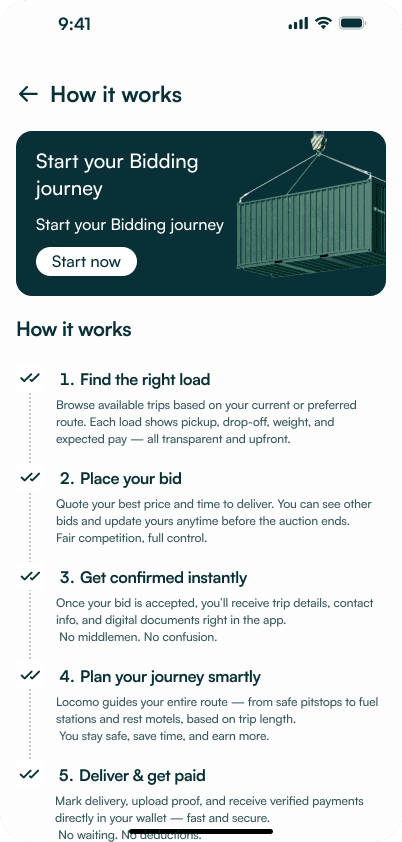
Additional Screens

Onbaording

FLOW

Bidding for Consignment

FLOW
Payment/Personal Finance

FLOW
Additional Screens

Impact & Learnings

Although Locomo remained a concept prototype, its intent echoes the ULIP vision — to unify a scattered ecosystem into a connected digital framework.
Its impact lies in rethinking logistics with empathy, sparking conversations around the human side of truck mobility.

If this vision aligns with yours or you’re building something for India’s logistics sector — let’s connect.
Let’s make it real, together.

Visual direction explorations

This project grounded me. It reminded me that design isn’t just about pixels — it’s about people.
Working on Locomo taught me how to translate data into dignity, and that even small ideas, if open-sourced with good intent, can travel far beyond the creator.
I didn’t want credits — I wanted contribution.

“The measure of progress isn’t in speed, but in how humanely we move forward.” — inspired by Socratic thought
Thanks for Reading

Thanks for Reading

Create a free website with Framer, the website builder loved by startups, designers and agencies.