Default image

Packwan

TEAM

MY ROLE

DURATION

Premise

This project reimagines food delivery packaging through a sustainable material and system design approach. Developed during a 48-hour design hackathon, it addresses the rising crisis of single-use waste by creating a circular packaging ecosystem using a composite of rice husk and recycled HDPE (rHDPE). The final outcome includes a family of reusable container prototypes, a business viability model, and an AI-assisted recycling system — demonstrating how sustainability can be both practical and scalable.
Problem Statement

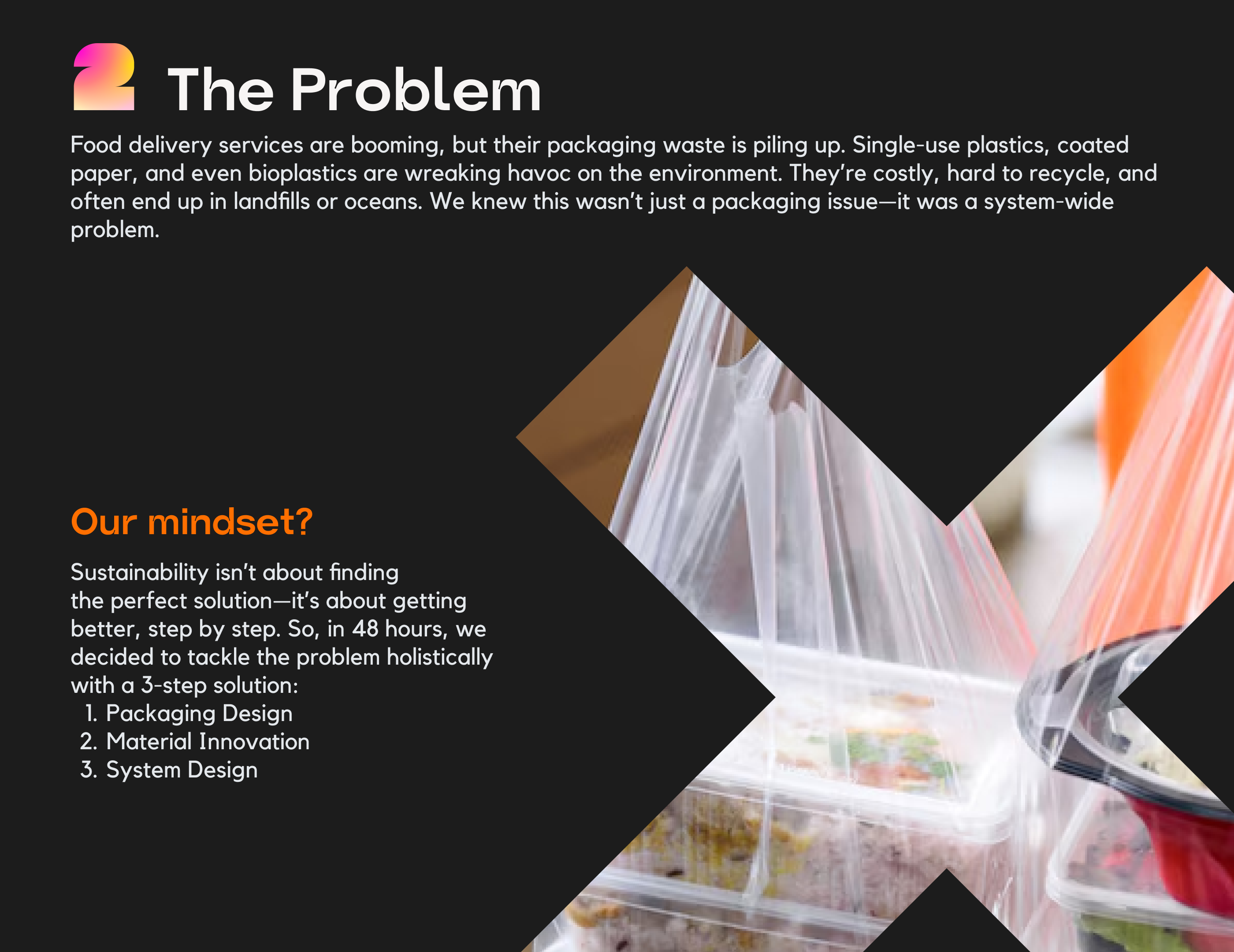
The food delivery boom has created a surge in single-use plastic packaging, most of which is non-recyclable and ends up in landfills within hours of use.

Restaurants and delivery brands need packaging that’s affordable, durable, and easy to use, while consumers expect it to be eco-friendly and safe — yet current solutions fail to meet both sides.

To make real impact, sustainability must be built into the system, not treated as an afterthought — connecting material, design, and reuse into a closed-loop ecosystem.

The food delivery boom has created a surge in single-use plastic packaging, most of which is non-recyclable and ends up in landfills within hours of use.

Restaurants and delivery brands need packaging that’s affordable, durable, and easy to use, while consumers expect it to be eco-friendly and safe — yet current solutions fail to meet both sides.

To make real impact, sustainability must be built into the system, not treated as an afterthought — connecting material, design, and reuse into a closed-loop ecosystem.

The food delivery boom has created a surge in single-use plastic packaging, most of which is non-recyclable and ends up in landfills within hours of use.

Restaurants and delivery brands need packaging that’s affordable, durable, and easy to use, while consumers expect it to be eco-friendly and safe — yet current solutions fail to meet both sides.

To make real impact, sustainability must be built into the system, not treated as an afterthought — connecting material, design, and reuse into a closed-loop ecosystem.

The food delivery boom has created a surge in single-use plastic packaging, most of which is non-recyclable and ends up in landfills within hours of use.

Restaurants and delivery brands need packaging that’s affordable, durable, and easy to use, while consumers expect it to be eco-friendly and safe — yet current solutions fail to meet both sides.

To make real impact, sustainability must be built into the system, not treated as an afterthought — connecting material, design, and reuse into a closed-loop ecosystem.

RESEARCH

The research aimed to understand how packaging decisions are made and what drives material choices. We mapped the food delivery ecosystem, analyzed supply chain dependencies, and studied current recycling limitations. The insight was clear: sustainability often fails not from lack of innovation, but from disjointed systems and cost pressures that prevent adoption at scale.

The research aimed to understand how packaging decisions are made and what drives material choices. We mapped the food delivery ecosystem, analyzed supply chain dependencies, and studied current recycling limitations. The insight was clear: sustainability often fails not from lack of innovation, but from disjointed systems and cost pressures that prevent adoption at scale.

Approach

1. Ecosystem Mapping

Major delivery platforms like Swiggy and Zomato design packaging in-house but outsource manufacturing and waste collection, creating fragmented accountability.
Insight: True sustainability requires feedback loops between design, production, and disposal.

2. Material Audit

India’s delivery packaging mix: 60% single-use plastic, 25% coated paper, 15% bioplastics (PLA/bagasse). Each alternative fails in either cost, recyclability, or performance.
Insight: No single material is ideal — the solution lies in hybrid composites balancing performance and sustainability.

3. Market Viability Study

PLA and bamboo packaging cost 3–5× more than conventional plastic, discouraging adoption.
Insight: Affordability drives real-world sustainability — innovation must align with business economics.

4. Recycling Infrastructure Analysis

Most recycling remains manual and error-prone, with contamination reducing efficiency.
Insight: Integrating AI-based material recognition and automated sorting can enable closed-loop recycling.

1. Ecosystem Mapping

Major delivery platforms like Swiggy and Zomato design packaging in-house but outsource manufacturing and waste collection, creating fragmented accountability.
Insight: True sustainability requires feedback loops between design, production, and disposal.

2. Material Audit

India’s delivery packaging mix: 60% single-use plastic, 25% coated paper, 15% bioplastics (PLA/bagasse). Each alternative fails in either cost, recyclability, or performance.
Insight: No single material is ideal — the solution lies in hybrid composites balancing performance and sustainability.

3. Market Viability Study

PLA and bamboo packaging cost 3–5× more than conventional plastic, discouraging adoption.
Insight: Affordability drives real-world sustainability — innovation must align with business economics.

4. Recycling Infrastructure Analysis

Most recycling remains manual and error-prone, with contamination reducing efficiency.
Insight: Integrating AI-based material recognition and automated sorting can enable closed-loop recycling.

1. Ecosystem Mapping

Major delivery platforms like Swiggy and Zomato design packaging in-house but outsource manufacturing and waste collection, creating fragmented accountability.
Insight: True sustainability requires feedback loops between design, production, and disposal.

2. Material Audit

India’s delivery packaging mix: 60% single-use plastic, 25% coated paper, 15% bioplastics (PLA/bagasse). Each alternative fails in either cost, recyclability, or performance.
Insight: No single material is ideal — the solution lies in hybrid composites balancing performance and sustainability.

3. Market Viability Study

PLA and bamboo packaging cost 3–5× more than conventional plastic, discouraging adoption.
Insight: Affordability drives real-world sustainability — innovation must align with business economics.

4. Recycling Infrastructure Analysis

Most recycling remains manual and error-prone, with contamination reducing efficiency.
Insight: Integrating AI-based material recognition and automated sorting can enable closed-loop recycling.

1. Ecosystem Mapping

Major delivery platforms like Swiggy and Zomato design packaging in-house but outsource manufacturing and waste collection, creating fragmented accountability.
Insight: True sustainability requires feedback loops between design, production, and disposal.

2. Material Audit

India’s delivery packaging mix: 60% single-use plastic, 25% coated paper, 15% bioplastics (PLA/bagasse). Each alternative fails in either cost, recyclability, or performance.
Insight: No single material is ideal — the solution lies in hybrid composites balancing performance and sustainability.

3. Market Viability Study

PLA and bamboo packaging cost 3–5× more than conventional plastic, discouraging adoption.
Insight: Affordability drives real-world sustainability — innovation must align with business economics.

4. Recycling Infrastructure Analysis

Most recycling remains manual and error-prone, with contamination reducing efficiency.
Insight: Integrating AI-based material recognition and automated sorting can enable closed-loop recycling.

Insights

TOP INSIGHTS

1. Ecosystem Mapping

User Persona

Primary users: Restaurant partners and delivery platforms — seeking cost-effective, durable, and compliant packaging that integrates easily into existing operations.
Secondary users: End consumers who appreciate eco-conscious design but value usability and aesthetics first.
Key insight: Sustainability should be seamless and invisible to the user — the system works in the background while the experience remains familiar.

WORDS FROM OUR USER

Dear Oliver,

I hope you're doing well! I wanted to share my excitement about creating websites with Framer's intuitive no-code platform.

Let's explore it together!Looking forward to discussing more about our design adventures!

Dear Oliver,

I hope you're doing well! I wanted to share my excitement about creating websites with Framer's intuitive no-code platform.

Let's explore it together!Looking forward to discussing more about our design adventures!

Dear Oliver,

I hope you're doing well! I wanted to share my excitement about creating websites with Framer's intuitive no-code platform.

Let's explore it together!Looking forward to discussing more about our design adventures!

INITIALS CHALLENGES

The great dilemma

DECIDING FACTORS

Designing

01

02

03

04

Flows

The core system flow traces the lifecycle:
Manufacture → Use → Return → AI Sorting → Recycling → Remolding → Reuse — forming a closed circular loop.

Design Decision 1:
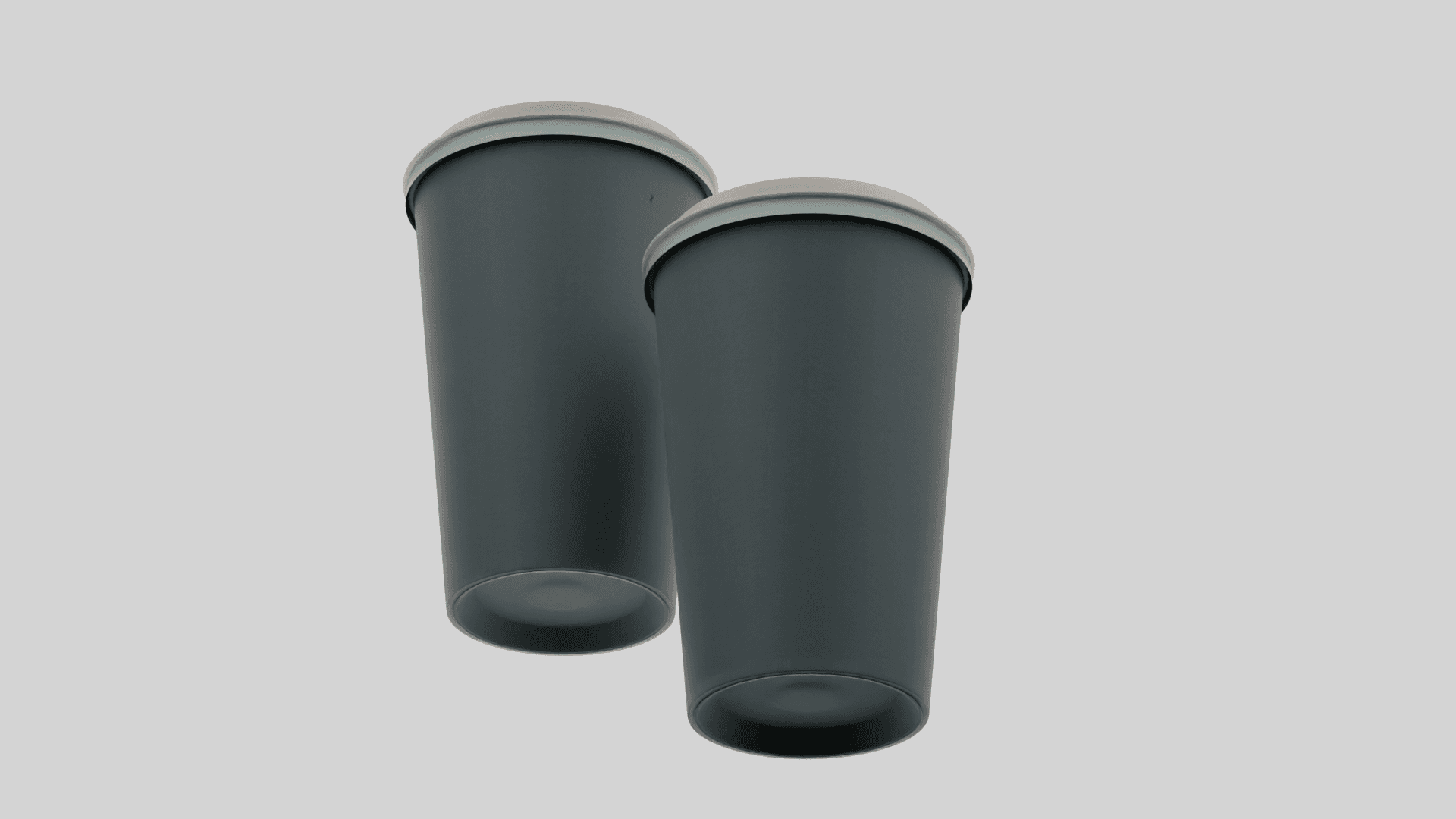
Combining 50% rice husk with 50% recycled HDPE produced a durable, heat-resistant, oil-proof composite that’s half plastic, half plant fiber. This reduced virgin plastic consumption by 50% while adding natural texture and thermal insulation.

Design Decision 2:
The geometry optimizationhexagonal, tapered, and oval forms — achieved up to 16% less material use with better structural rigidity and stackability. Curved interiors minimized food residue, supporting reuse and hygiene.

Impact & Learnings

Visual direction explorations

Thanks for Reading

Thanks for Reading

Create a free website with Framer, the website builder loved by startups, designers and agencies.